Business Cards 10.14.26
Business Card Design Trends for NYC Professionals in 2027

Daniel Cantor
In New York City, where professionals compete for attention across industries such as finance, real estate, fashion, technology, hospitality, and creative services, a well-designed business card remains a valuable networking tool. Although digital platforms make sharing contact information easier, printed cards offer something different: a tangible representation of a professional’s identity, attention to detail, and brand personality. Looking toward 2027, emerging directions in print design point toward a combination of expressive typography, tactile materials, sustainable paper choices, and smarter connections between physical and digital networking. These developments build on trends already visible in the 2026 print industry, rather than representing guaranteed predictions for the year ahead.
For businesses and individuals investing in business card design nyc, the goal is not simply to follow the latest aesthetic. It is to create a card that communicates credibility, reflects the right professional image, and makes contact information easy to remember and use. At Japan Printing, we specialize in stationery design and printing, helping businesses turn their branding into thoughtfully produced printed materials. Contact Japan Printing to request a quote for your business card design and creation project and discover options tailored to your brand, audience, and budget.
Expressive Typography and Minimalist Layouts
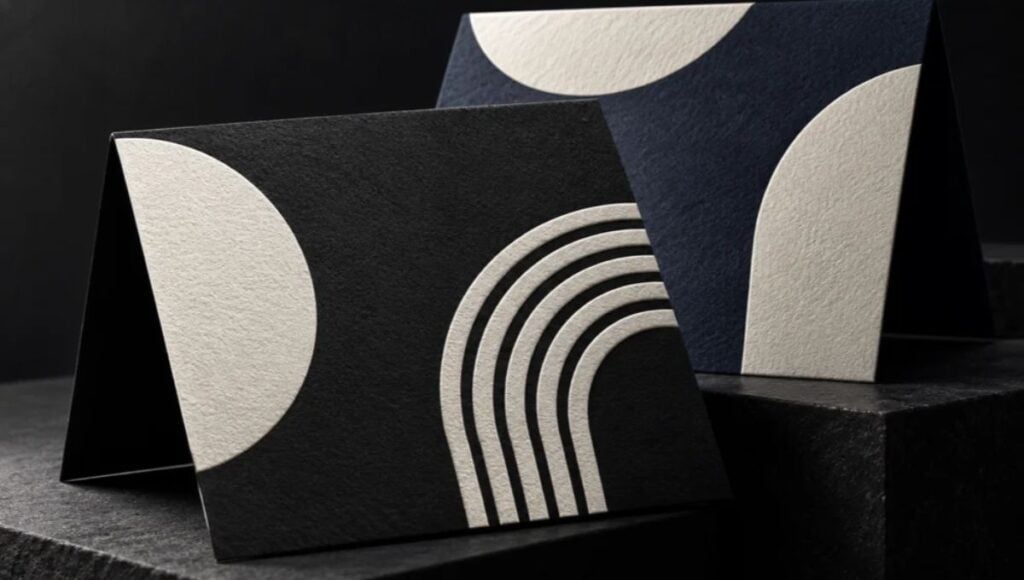
Typography is becoming an increasingly important part of contemporary print identity. Industry discussions about 2026 design trends highlight bold lettering, distinctive typefaces, and layouts that use typography as a primary visual element rather than relying on decorative graphics. These approaches are likely to remain relevant in 2027 because they allow professionals to communicate personality while keeping a small printed format organized and readable.
For NYC professionals, this trend offers considerable flexibility. A creative director might choose an expressive display typeface, while a lawyer or financial consultant may prefer a refined serif font or a clean sans-serif family. The important consideration is whether the typography supports the profession and the expectations of its audience.
Minimalism also continues to provide a practical foundation for effective business cards. Instead of filling every available space with information, designers can establish a clear hierarchy through font size, weight, alignment, and spacing. White space helps separate elements and makes essential details easier to locate.
Consider these practical approaches when developing a typography-led card:
- Use a clear information hierarchy: Make the person’s name prominent, followed by their professional title, company, and essential contact details.
- Choose typefaces that reflect the brand: Contemporary sans-serif fonts can communicate modernity, while traditional serif styles may suggest heritage or formality.
- Limit unnecessary font combinations: One or two complementary typefaces, used with intentional variations in weight and size, can create a consistent appearance.
- Experiment with alignment: Asymmetrical layouts, left-aligned text, and carefully positioned brand marks can introduce personality without creating clutter.
- Protect readability: Decorative lettering should not compromise the legibility of names, email addresses, telephone numbers, or website URLs.
A restrained design can also accommodate a distinctive visual feature, such as a colored edge, an oversized initial, or a subtle graphic associated with the profession. The objective is to make the card recognizable without overwhelming the information it needs to communicate. Before printing, typography should be reviewed at actual card size, since details that look elegant on a large computer screen may become difficult to read on paper.
Tactile Materials and Premium Finishing Techniques
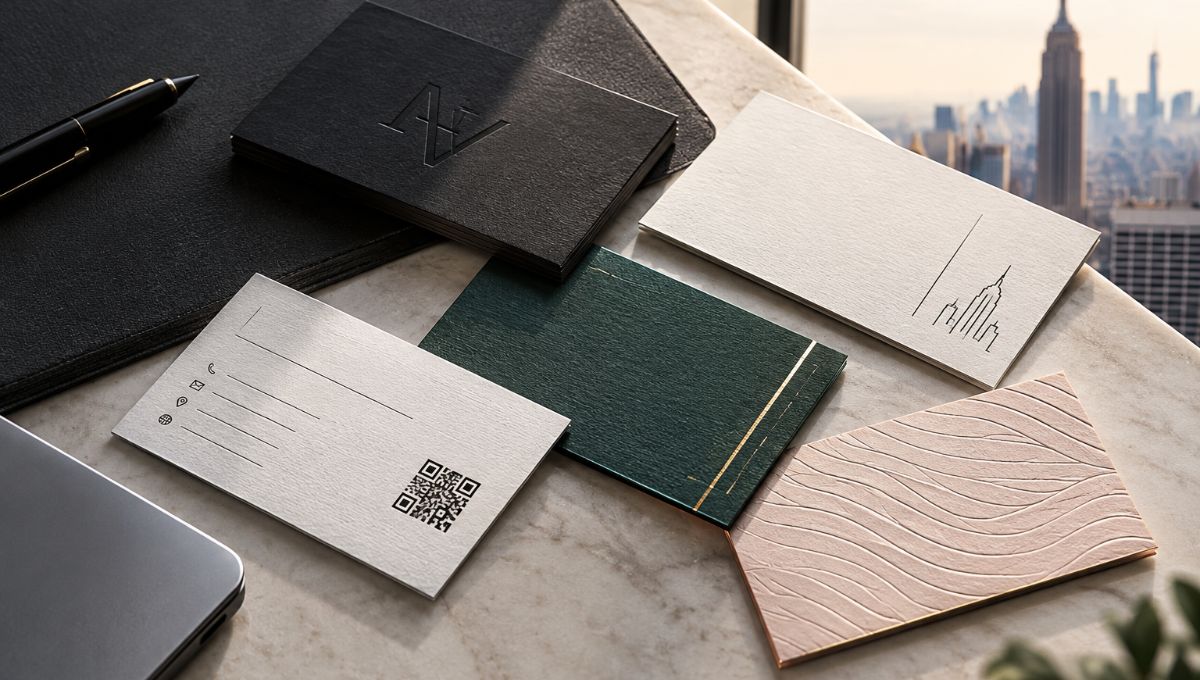
One of the strongest directions in recent business card design is the emphasis on the physical experience of printed materials. Unlike a digital profile, a business card can communicate through its weight, surface, texture, and finish. Printing industry trend coverage for 2026 highlights specialty paper stocks, embossing, foil stamping, soft-touch surfaces, and selective gloss as ways to create more distinctive printed pieces. These techniques provide a useful starting point for professionals considering their 2027 branding.
In NYC’s competitive professional environment, tactile finishes can help communicate a brand’s positioning. A luxury real estate broker may benefit from a substantial card with understated metallic details, while a boutique creative agency could choose textured paper and an unconventional layout. Meanwhile, a consultant seeking a polished but economical option might achieve a sophisticated result through high-quality cardstock, careful typography, and a matte finish.
The most effective approach is to select finishes that support the design rather than adding effects simply because they are available.
Popular options to consider include:
- Matte finishes: Reduce surface glare and create a restrained, contemporary appearance.
- Soft-touch coatings: Provide a smooth, velvety surface that adds a tactile dimension to the card.
- Foil stamping: Applies metallic or specialty foil to selected details, such as a logo, monogram, or name.
- Embossing and debossing: Create raised or recessed elements that introduce texture and visual depth.
- Spot UV: Adds selective gloss to particular areas, producing contrast against a matte background.
- Textured and duplex stocks: Offer distinctive paper surfaces or layered construction for a more substantial feel.
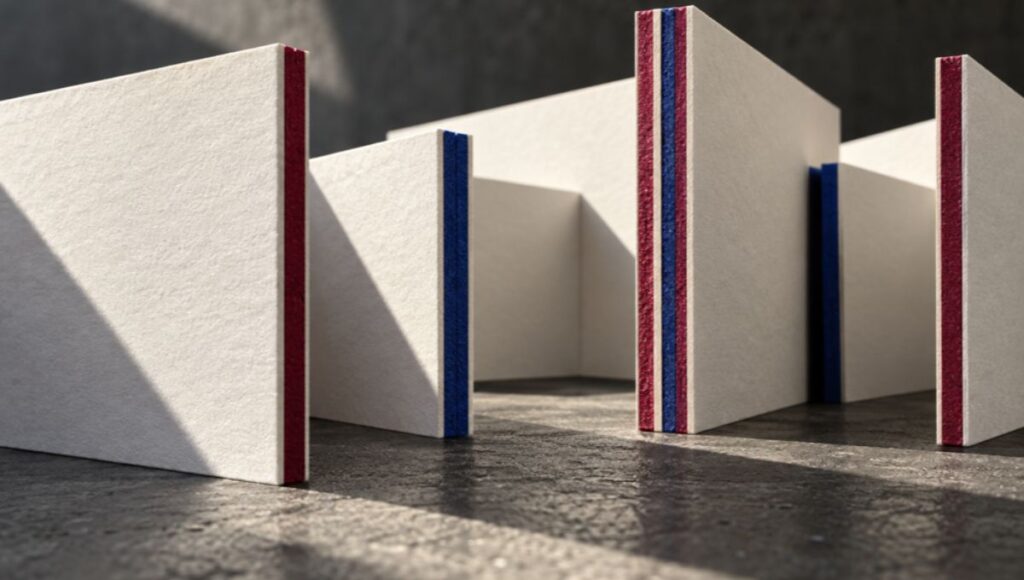
- Colored edges: Introduce a small but noticeable accent when viewed from the side of the card.
Material compatibility is essential. Some textured stocks reproduce fine details differently from smooth coated papers, while particular coatings can affect color appearance and recyclability. Small text, thin lines, and intricate logos should therefore be evaluated against the selected production method.
For 2027 projects, professionals should also consider the practical context in which their cards will be distributed. A heavily embellished card may be suitable for an exclusive client meeting but unnecessary for a high-volume conference. Requesting paper samples or printed proofs, when available, can help confirm that the chosen combination of material, ink, and finishing delivers the intended result.
Sustainable Paper Choices and Material-Conscious Design
Sustainability is another important consideration for businesses planning their printed branding for 2027. Discussions about the future of print increasingly focus on material selection, waste reduction, responsible sourcing, and how coatings or other finishing processes affect a printed product’s end of life. For business cards, these considerations can influence both the visual design and the production specifications.
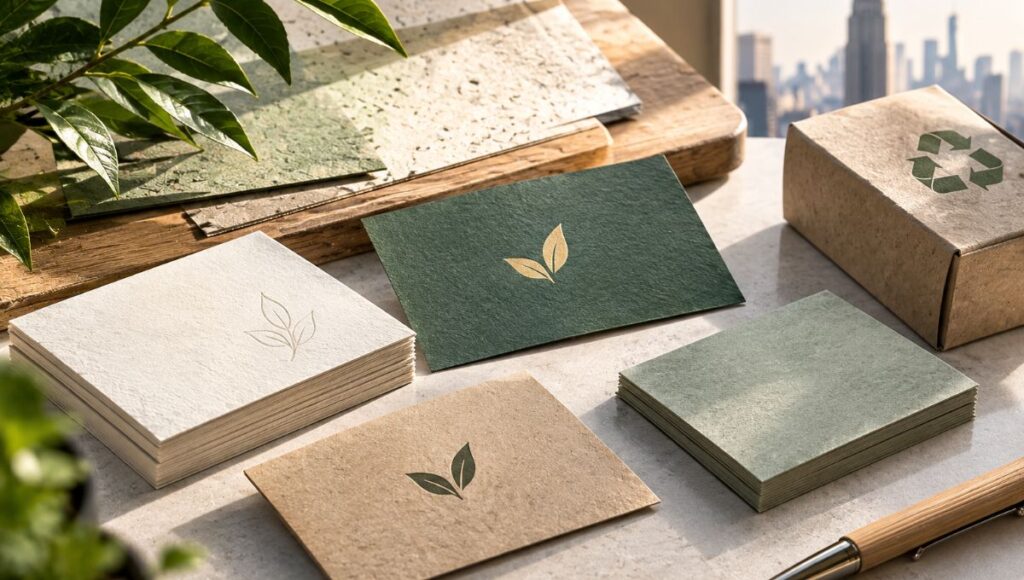
Recycled paper, uncoated stocks, and papers sourced from responsibly managed forests offer potential alternatives to conventional paper choices. These materials can also contribute to a distinctive visual identity. Natural fibers, subtle surface variations, and warm neutral tones may complement the branding of architecture studios, independent retailers, consultants, and businesses that want to communicate an understated aesthetic.
However, sustainability does not automatically mean choosing the most rustic-looking paper. A contemporary design printed on a recycled stock can be just as refined as one produced on conventional cardstock. The best option depends on the desired appearance, print quality, availability, and the intended use of the card.
When evaluating more sustainable business card options, NYC professionals should consider the following:
- Recycled paper stocks: Ask about the percentage of recycled content and whether it is post-consumer or pre-consumer material.
- Responsible sourcing: Look for appropriate documentation or recognized certifications, such as FSC certification, where available.
- Uncoated paper: Consider whether the natural surface suits the brand and whether the chosen stock reproduces small text and fine graphics clearly.
- Finishing requirements: Evaluate whether lamination, foil, specialty coatings, or other embellishments are necessary for the design.
- Print quantities: Estimate realistic distribution needs to avoid ordering substantially more cards than the business can use.
- Production waste: Discuss sheet layouts, standard sizes, and efficient production options with the printer.
It is important to avoid making environmental claims without evidence. Recycled content, paper sourcing, coatings, transportation, and manufacturing methods can all influence a product’s overall environmental impact. A recycled card with several difficult-to-separate finishing layers, for example, may present different end-of-life considerations from a simpler uncoated card.
For businesses developing a new identity in 2027, the most practical strategy is to establish material priorities early in the design process. Doing so allows the designer and printer to select compatible colors, finishes, and production methods instead of attempting to make the entire design fit a material chosen at the last minute.
Digital Integration, QR Codes, and Flexible Business Card Design
Business cards are also evolving as a connection between face-to-face networking and online communication. QR codes and NFC-enabled experiences offer ways to connect a printed card with a digital profile, portfolio, booking page, or other relevant online destination. Rather than replacing printed cards, these features can give recipients another way to continue a conversation after a meeting or event.
This approach is particularly relevant to NYC professionals who regularly attend conferences, industry events, client meetings, trade shows, and networking gatherings. A real estate agent might link to property listings, a designer could direct potential clients to a portfolio, and a consultant might provide access to a scheduling page. For a small business, a QR code could connect the card to a landing page containing services, location information, and a contact form.
The key is to make the digital feature useful and easy to access. A QR code should not be included solely because it looks modern; it should have a clear purpose and lead to a destination that works well on mobile devices.
Consider these best practices for integrating digital features:
- Choose one primary action: Direct recipients to a portfolio, contact page, appointment calendar, or professional profile rather than presenting too many competing destinations.
- Use a clear call to action: Short prompts such as “View My Portfolio” or “Book a Consultation” explain why scanning the code is worthwhile.
- Test before printing: Check the QR code on multiple smartphones and verify that it reaches the correct destination.
- Maintain sufficient contrast: Use a design that preserves reliable scanning, with appropriate code size and clear space around the code.
- Protect the information hierarchy: Contact details should remain readable without requiring recipients to scan anything.
- Plan for updates: If using a QR code that points to an editable landing page, establish who will maintain the destination and keep its information current.
- Consider NFC where appropriate: Near-field communication can offer tap-to-connect functionality, although its cost, implementation, and compatibility should be evaluated before production.
Digital integration also creates an opportunity for more flexible printing programs. Companies with multiple employees can maintain a consistent visual identity while customizing names, titles, telephone numbers, or other approved details. Digital printing and variable-data workflows can support these requirements, depending on the printer’s capabilities and the project’s specifications.
For 2027, the strongest approach is likely to be a balanced one: a well-designed physical card, complemented by a useful digital destination. The printed piece should still communicate the brand clearly, even when the recipient never scans its code.
Conclusion
Business card design in 2027 will offer NYC professionals opportunities to combine distinctive typography, tactile finishes, thoughtful material choices, and useful digital connections. While these directions build on developments already visible in the print industry, the best design decisions will depend on each business’s identity, audience, budget, and networking goals. A minimalist card with excellent typography may be more effective for one professional than a heavily embellished design, while another business may benefit from specialty paper, metallic accents, or an integrated QR code. Regardless of the approach, readability, consistent branding, and careful print production should remain priorities.
At Japan Printing, we help businesses bring their visual identities to life through stationery design and printing, with business cards as a central part of our work. Whether you are refreshing an established brand, launching a new business, or preparing for your next NYC networking event, we can help you explore design concepts, paper stocks, and finishing options suited to your project. Contact Japan Printing today to request a quote for your business card design and creation project and create printed materials that represent your professional identity with clarity, quality, and purpose.