Business Cards 10.27.26
Edge Painting vs. Foil Edges: Which Premium Finish Should You Choose?

Daniel Cantor
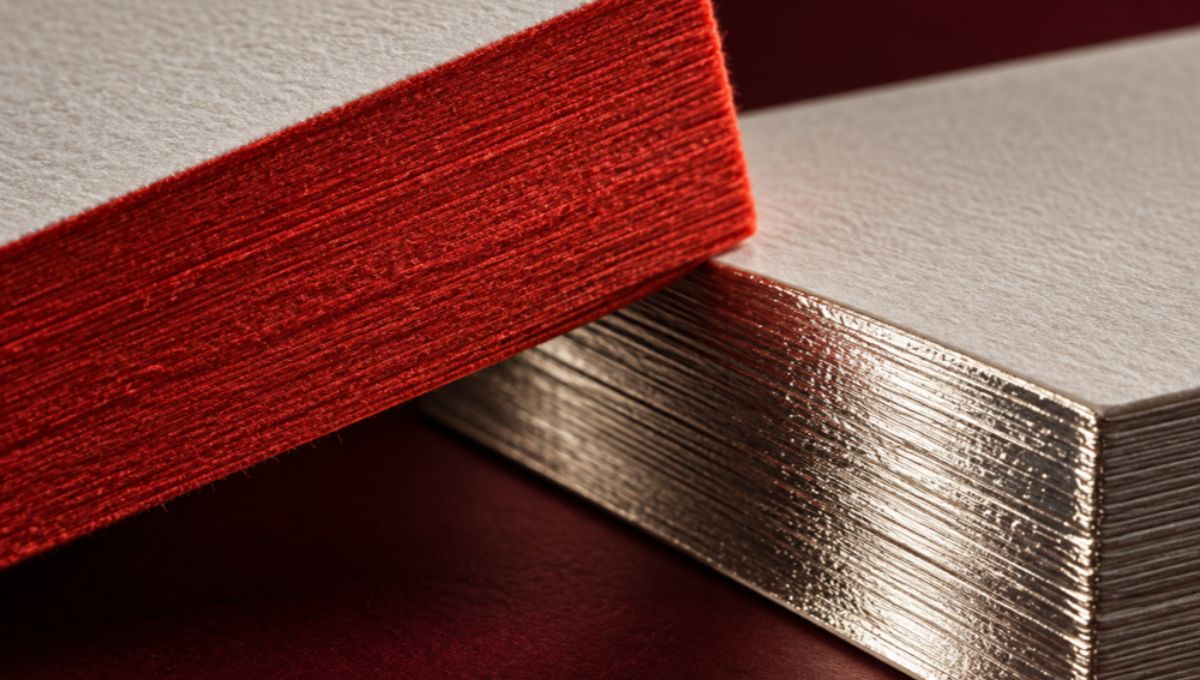
When it comes to premium business cards, the smallest details can make a significant difference in how a brand is perceived. While paper quality, typography, and layout establish the foundation of a design, specialty finishes offer additional opportunities to communicate personality and sophistication. Edge painting and foil edges are two distinctive finishing techniques that transform the sides of a business card into an intentional part of its visual identity. Although both add an upscale touch, they create different effects: edge painting emphasizes color and contrast, while edge foiling introduces a reflective, metallic accent.
Choosing between them depends on your brand identity, preferred aesthetic, paper stock, and budget. If you are exploring business card design nyc options, understanding these differences can help you make a more informed printing decision. Contact Japan Printing to request a quote for your business card design and printing project, and discover how the right finishing details can bring your brand to life.
What Is Edge Painting, and How Does It Enhance Business Cards?
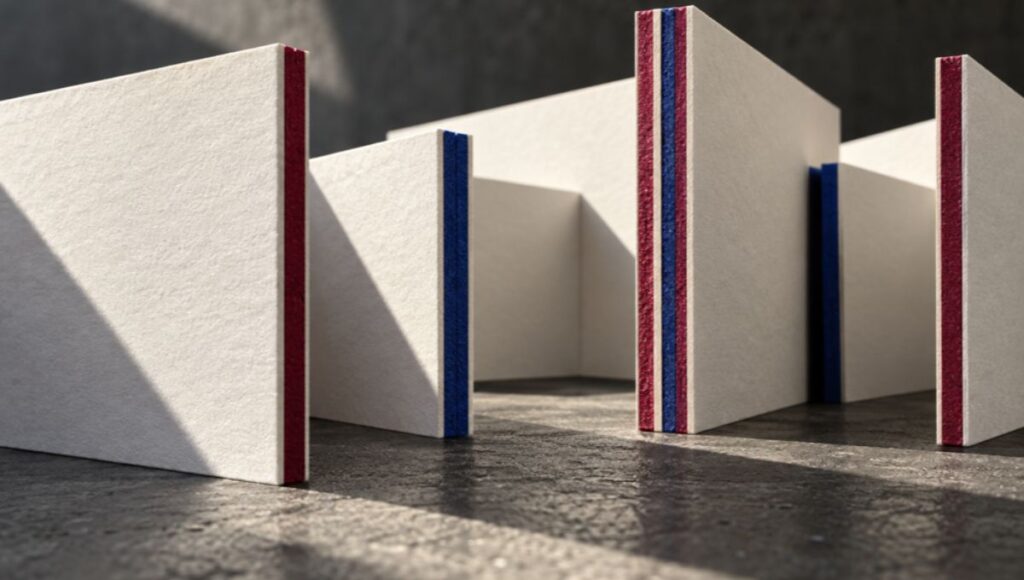
Edge painting is a specialty finishing technique in which colored ink or paint is applied to the exposed, trimmed sides of a business card. Rather than adding another graphic element to the front or back, this process introduces color along the card’s perimeter. The result can be subtle and understated or bold and attention-grabbing, depending on the selected color and the thickness of the paper.
The process generally takes place after the cards have been printed and cut. The finished cards are stacked and secured so that their edges form a relatively uniform surface, allowing the color to be applied consistently. The technique is particularly effective with thick, layered, or duplexed cardstock because the larger edge creates a more visible band of color. However, the final appearance depends on the paper, the application method, and the printer’s production capabilities.
One of the greatest advantages of edge painting is its flexibility. Businesses can choose a color that complements their existing branding or introduces a contrasting accent that makes the cards easier to recognize in a stack. Depending on the printer, standard colors, custom-matched shades, and selected metallic paints may be available.
Edge painting works especially well for brands that want a distinctive appearance without relying on a highly reflective finish. Examples include:
- Creative studios and design agencies: Bright orange, electric blue, or fluorescent pink edges can reinforce a contemporary visual identity.
- Corporate and professional services: Black, navy, or other restrained colors can create a polished, coordinated appearance.
- Boutique retailers and lifestyle brands: A carefully selected brand color can make the card feel more distinctive and cohesive.
- Luxury stationery projects: Deep, contrasting colors can complement heavyweight paper, refined typography, and minimalist layouts.
It is important to remember that edge painting is a finishing detail rather than a substitute for a strong design. The edge color should work with the card’s front and back, complement the paper stock, and support the overall brand message. When these elements are coordinated, a seemingly small detail can give a business card a more considered, professional appearance.
What Are Foil Edges, and When Should You Choose Them?
Foil edges, also known as edge foiling or edge gilding, involve applying a thin metallic foil to the exposed sides of a business card. Unlike conventional edge painting, which generally produces a solid band of pigment, foil creates a reflective surface that catches and changes with the light. Gold and silver are familiar options, while rose gold, copper, and selected specialty or holographic foils may also be available depending on the printer.
The process commonly uses heat and pressure to bond the foil to the prepared card edges. Because foil application depends on the condition of the edge and the materials involved, the printing provider must confirm that the selected stock is suitable. Thick, sturdy cardstock often provides a more prominent surface for the metallic treatment, while thinner cards may offer limited visual impact or may not be compatible with the required production method.
Foil edges are particularly useful when a brand wants to communicate refinement, exclusivity, or a sense of occasion. Their reflective quality makes them visually different from matte edge paint, even when the two treatments use similar colors. A gold foil edge, for example, creates a more jewelry-like effect than a flat gold-painted edge.
Consider foil edges for projects such as:
- Luxury brands: Gold or silver edges can complement premium typography, restrained layouts, and carefully selected paper.
- Jewelry and beauty businesses: Metallic details can reinforce a visual identity associated with elegance and presentation.
- Executive and professional services: A subtle metallic accent can distinguish a business card without requiring an elaborate front design.
- Wedding, event, and bespoke stationery: Foil edges can coordinate with metallic lettering, invitation details, or other premium printed materials.
Foil edges can also be paired with foil stamping on the face of the card. For example, a simple logo in gold foil combined with matching gold edges creates continuity between the front design and the card’s perimeter. Silver foil can similarly complement cool neutrals, dark blue, or black.
However, metallic finishes are not automatically the best choice for every brand. A business with a playful, colorful, or minimalist identity may benefit more from a contrasting painted edge. Foil can also introduce additional production costs and technical requirements. Before finalizing the design, discuss the desired metallic effect, cardstock thickness, finish compatibility, and production schedule with your printing provider.
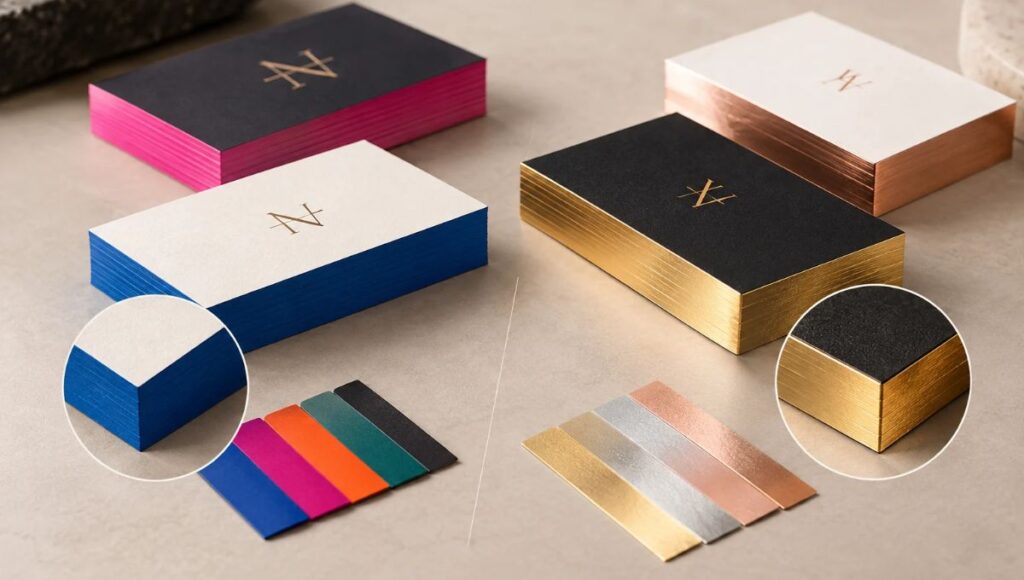
Edge Painting vs. Foil Edges: Key Differences in Appearance, Cost, and Materials
Although both finishes add interest to the sides of a business card, they differ in appearance, production requirements, and overall design impact. Understanding these distinctions helps businesses choose a finish that supports their objectives rather than selecting one simply because it looks luxurious.
The most obvious difference is how each finish interacts with light. Edge painting generally creates a solid, non-reflective band of color, while foil edges produce a metallic sheen. This distinction remains important even when both options use similar colors: painted gold tends to appear softer and more subdued, whereas gold foil delivers a more reflective, metallic appearance.
The choice of cardstock also matters. Edge painting can be applied to different thicknesses, although a thicker card makes the color more noticeable. Foil edging is typically more demanding and often requires thicker stock with a suitable, smooth edge. Duplexed and triplexed cards, constructed from multiple bonded layers, can provide additional thickness for a more substantial premium effect.
Here is a practical comparison:
| Feature | Edge painting | Foil edges |
|---|---|---|
| Visual effect | Solid band of color, often matte | Reflective, metallic surface |
| Color options | Brand colors, contrasting shades, and selected metallic paints | Gold, silver, rose gold, copper, and specialty foils |
| Brand personality | Creative, contemporary, colorful, understated | Elegant, luxurious, refined, celebratory |
| Paper requirements | Flexible, depending on the printer and desired effect | Usually requires thicker stock and suitable edge preparation |
| Visibility | Depends on color contrast and card thickness | Depends on metallic reflectivity and card thickness |
| Production considerations | Paint application and compatibility with paper | Foil application, heat, pressure, and edge suitability |
| Budget | Often the more economical option | Often more expensive, depending on the specification |
Cost should be evaluated alongside the entire printing specification. Neither finish has a universal price because pricing varies by supplier, order quantity, cardstock, color selection, and additional treatments. Foil edging may carry a higher cost due to its materials and production requirements, but the difference must be confirmed with a project-specific quote.
Durability is another consideration. Both finishes are designed to enhance the card, but their performance depends on application quality, materials, and everyday handling. Painted edges can experience wear through repeated friction, while foil edges can also be affected by handling and production quality. Neither should be assumed to remain flawless indefinitely.
To make a confident decision, request physical samples when possible. Compare the colors under different lighting conditions, feel the cardstock, inspect the edges, and evaluate how each option complements your logo and typography. A sample often communicates more about the final result than a digital mockup alone.
How to Choose the Right Edge Finish for Your Brand and Business Card Design
Selecting between edge painting and foil edges starts with a clear understanding of what your business card should communicate. The finish should reinforce your brand identity, complement the rest of the design, and suit the people who will receive the card. A visually impressive treatment is most effective when it feels consistent with the business behind it.
Begin by identifying the main impression you want to create. If your brand is colorful, innovative, or design-focused, a painted edge in a distinctive brand color may provide the strongest result. If your business emphasizes luxury, exclusivity, or formal presentation, a metallic foil edge may be more appropriate. Neither finish is inherently superior; each serves a different visual purpose.
Next, consider the relationship between the edge and the card’s surface. A dark card with a vivid painted edge can create a striking contrast, while a white or cream card with a restrained colored edge can feel more understated. Metallic edges often work well with minimalist layouts because they introduce a premium detail without requiring additional graphics.
Use the following checklist when planning your project:
- Define your brand identity: Choose a finish that reinforces your existing colors, tone, and visual style.
- Select suitable cardstock: Confirm the available thicknesses and whether the selected material supports your preferred treatment.
- Establish a color strategy: Decide whether the edge should match the brand palette, contrast with it, or coordinate with metallic elements elsewhere in the design.
- Consider complementary finishes: Edge painting and foil edging can work alongside other techniques, including foil stamping, letterpress, embossing, or debossing, when the materials and production process allow.
- Review the budget: Compare quotations for the same paper stock, quantity, dimensions, and finishing specifications.
- Allow for production requirements: Ask about proofs, finishing compatibility, turnaround times, and any minimum order quantities.
- Request samples or a proof: Verify the appearance of the finished product before approving the full production run.
For businesses investing in professional stationery, consistency across printed materials is particularly valuable. A painted edge can carry a brand color from a business card into other stationery pieces, while a metallic foil edge can coordinate with premium invitations, presentation materials, or branded correspondence.
Finally, think about the practical context in which your cards will be distributed. Cards exchanged frequently at conferences may require a different balance of cost and visual impact from cards reserved for selected clients or executive introductions. Your printing budget can also be allocated strategically: a premium finish on a carefully targeted batch may be more appropriate than applying the most expensive treatment to every card.
The strongest choice is the one that combines design intent, appropriate materials, production feasibility, and budget into a cohesive result.
Conclusion
Edge painting and foil edges offer two distinct ways to elevate a premium business card. Edge painting is an excellent option for brands that value color, contrast, and creative flexibility, while foil edges are ideal for businesses seeking a reflective metallic detail that communicates sophistication. Your final decision should consider brand identity, cardstock thickness, complementary finishes, production requirements, and budget. Before committing to either option, compare physical samples and consult your printer about the materials and techniques best suited to your design.
A thoughtfully finished business card can help your brand make a memorable impression long after an introduction. Ready to create business cards that reflect your brand’s quality and personality? Contact Japan Printing today to request a quote for your business card design and printing project. Our team can help you explore suitable materials, finishing options, and design possibilities to create professional stationery that stands out.