Business Cards 10.12.26
How NYC Small Businesses Can Use Business Cards to Build Local Brand Recognition

Daniel Cantor

In a city as competitive as New York, small businesses need more than a great product or service to stand out. They need a recognizable brand that customers remember long after an initial conversation. While digital marketing, social media, and online advertising play important roles in reaching new audiences, business cards remain a practical way to introduce a brand, share contact information, and create opportunities for meaningful local connections. From independent retailers in Brooklyn to consultants in Manhattan and neighborhood service providers in Queens, businesses can use thoughtfully designed business cards to make a lasting impression in their communities.
The key is to treat a business card as more than a piece of paper. Its design, materials, messaging, and distribution should reinforce what makes your business different. If you are exploring small business cards NYC solutions, Japan Printing can help you turn your brand identity into professionally designed and printed business cards that support your local marketing goals. Contact Japan Printing to request a quote for your business card design and printing project.
Create a Consistent Visual Identity That Customers Recognize
Local brand recognition begins with consistency. Customers are more likely to recognize and remember a business when its visual identity remains familiar across the different places where they encounter it. Your business card should therefore reflect the same branding used on your website, storefront, social media profiles, packaging, and other marketing materials.
For example, a neighborhood bakery might use warm colors, a distinctive logo, and friendly typography to communicate its personality. A financial consultant, on the other hand, may prefer a restrained color palette, clean typography, and a minimalist layout that conveys professionalism. Neither approach is universally better; the right choice depends on the audience and the identity the business wants to communicate.
When developing your business card, consider the following elements:
- Logo: Use a clear, high-quality version of your logo that remains recognizable at a small size.
- Brand colors: Choose colors that match your existing identity and can be reproduced appropriately in print.
- Typography: Select readable fonts that reflect your brand’s personality without making essential information difficult to find.
- Layout: Organize your business name, contact details, and other important information in a logical visual hierarchy.
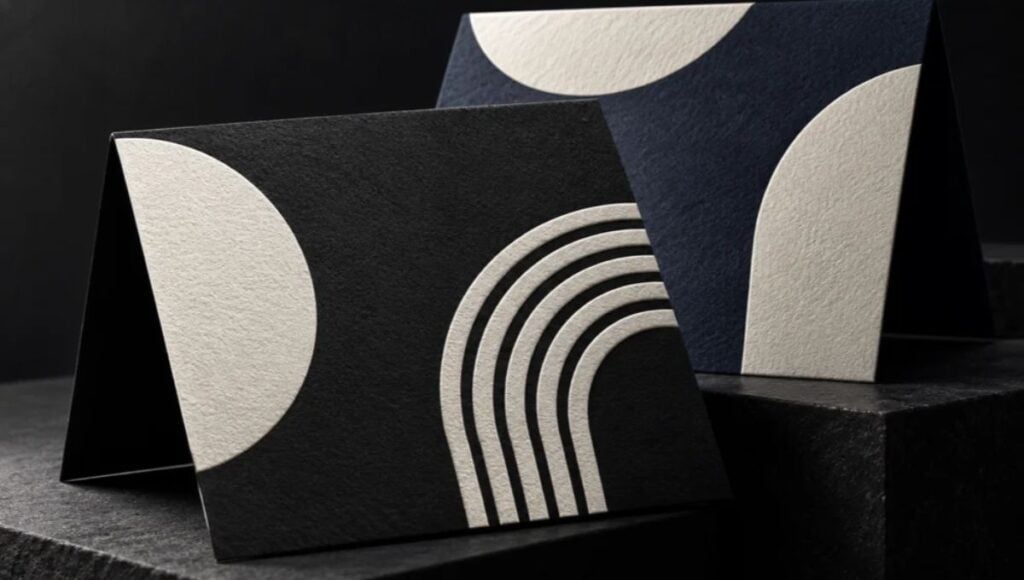
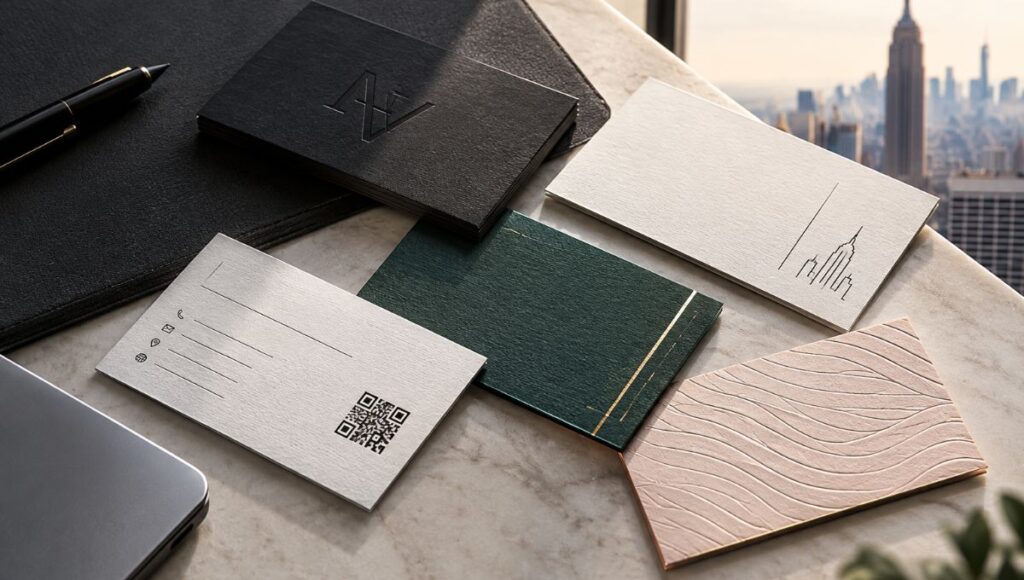
- Paper and finish: Consider how the card’s texture, thickness, and finish complement the experience you want customers to associate with your business.
Consistency does not mean every marketing material must look identical. Instead, the elements should work together to create a recognizable visual system. A business card can have a simpler layout than a website while retaining the same logo, colors, and typography.
Before sending a design to print, review it alongside your other branded materials. Confirm that the logo is current, the colors are appropriate, and the contact information matches your online presence. If your business has established brand guidelines, use them as the starting point. If you are still developing your identity, professional design support can help you establish a coherent look before investing in a larger print run.
For NYC small businesses competing for attention in busy commercial districts and close-knit neighborhoods, a consistent business card helps reinforce the same brand message every time it changes hands.
Turn Everyday Local Interactions Into Networking Opportunities
New York offers small businesses many opportunities to meet potential customers, suppliers, collaborators, and referral partners. These interactions can happen at neighborhood events, professional meetups, trade shows, community markets, industry gatherings, or informal conversations with other business owners. A business card makes it easy to turn a brief introduction into a connection that can continue after the conversation ends.
Unlike relying entirely on someone remembering your business name or searching for your profile later, exchanging cards gives both people a convenient way to retain essential contact details. It also creates a natural opportunity to explain what your business does and identify how you might work together.
Small businesses can make business cards part of their everyday networking routine by:
- Attending neighborhood events: Bring cards to street fairs, community gatherings, pop-up markets, and local business events where appropriate.
- Building professional relationships: Exchange cards with complementary businesses, such as a photographer connecting with event planners or a graphic designer meeting a marketing consultant.
- Connecting with suppliers and partners: Keep contact information accessible when discussing collaborations, purchasing arrangements, or future projects.
- Supporting referral networks: Give existing customers a few cards to share with people who may benefit from your products or services.
- Following up promptly: After meeting someone, use the information they shared to send a relevant, personalized message rather than an unsolicited generic pitch.
The way you present a card matters, too. Keep a small supply clean, organized, and easy to access. Offer one when it naturally fits the conversation, and take a genuine interest in the other person’s business rather than treating every encounter as a sales opportunity.
It is also worth tailoring your introduction to the situation. A freelance designer might briefly mention the types of businesses they help, while a neighborhood restaurant owner could explain a specialty or upcoming event. The card supports the conversation; it does not replace it.
Remember that networking does not guarantee new customers. Its value comes from building relationships over time, and a business card is one practical tool for maintaining those connections. When the design clearly communicates your business identity and the information is easy to use, it can help make those introductions more productive.

Use Strategic Distribution to Build Relationships Across Your Neighborhood
A well-designed business card can support local marketing, but its impact depends partly on where and how it is distributed. Rather than handing out cards indiscriminately, small businesses should identify places and relationships that connect them with their intended audience.
NYC neighborhoods contain diverse customer groups, business districts, and community networks. A home repair company may want to connect with property managers and homeowners, while an independent clothing boutique might focus on nearby shoppers, local creators, and community events. Understanding where potential customers already spend time helps businesses choose more relevant distribution opportunities.
Consider these practical approaches:
- Collaborate with complementary businesses: With permission, explore reciprocal referrals or appropriate card displays with businesses that serve a similar audience without directly competing with you.
- Participate in community events: Bring cards to local fairs, workshops, networking sessions, and other events relevant to your business.
- Include cards with purchases: For suitable retail or service businesses, placing a card in a shopping bag, order package, or customer handout can help customers remember where they bought something.
- Support customer referrals: Make it easy for satisfied customers to recommend your business by giving them a few cards to share.
- Connect print with digital channels: Include a website or a carefully selected QR code that leads to a useful destination, such as a booking page, portfolio, menu, or contact form.
- Build relationships with local organizations: Where relevant and permitted, introduce your services to professional associations, community groups, and event organizers.
Distribution should always be appropriate to the location and the people receiving the cards. Ask before leaving materials at another business, follow event rules, and avoid cluttering public spaces with unsolicited promotional items.
You can also evaluate which approaches are worth repeating. If you distribute cards at several events, ask new customers how they heard about your business or use a dedicated landing page for a particular campaign. These methods will not measure every interaction, but they can provide useful clues about which activities are generating inquiries.
Quantity alone is not a reliable measure of success. A smaller number of cards exchanged with relevant contacts may create more useful opportunities than hundreds handed out without context. Focus on making your cards available at moments when someone has a genuine reason to remember, contact, or recommend your business.
For a local business, this targeted approach makes business cards part of an ongoing relationship-building strategy rather than a one-time promotional expense.
Prepare Professional, Print-Ready Cards That Reflect Your Business Quality
The effectiveness of a business card depends not only on its design concept but also on how successfully that design translates into a finished printed product. Blurry logos, clipped text, difficult-to-read contact details, and unexpected color differences can undermine an otherwise strong brand presentation. Careful preparation helps avoid these problems and makes the final cards more useful.
Before printing, confirm the production specifications with your print provider. A common US business card size is 3.5 × 2 inches, although custom sizes and formats are also available. The correct setup depends on the selected product and printer’s requirements.
Use this checklist to prepare your artwork:
- Confirm the finished dimensions: Set up the document according to the printer’s template rather than guessing the final size.
- Add bleed where required: If artwork extends to the edge, extend the background or image beyond the trim line by the amount specified by the printer. A common requirement is 0.125 inches on each side.
- Respect the safe area: Keep names, phone numbers, logos, and other essential elements comfortably inside the trim line so they are less likely to be cut off.
- Use high-resolution assets: Prepare raster images at approximately 300 DPI at their final printed size, and use vector artwork for logos when possible.
- Check color settings: Commercial printing commonly uses CMYK, while digital screens use RGB. Ask the printer about its preferred color profile and review important brand colors before production.
- Export an appropriate file: A high-quality PDF is commonly used for print submission. Follow the printer’s instructions for fonts, embedded images, bleed, and other export settings.
- Proofread every detail: Check names, job titles, telephone numbers, email addresses, URLs, and QR codes before approving the final file.
These steps align with common print-preparation guidance, including the importance of checking bleed, resolution, color, and document setup before submitting artwork. The exact specifications can vary by printer and product, so the selected print provider’s template should take precedence.
It is equally important to think about the physical card. Different paper stocks, thicknesses, coatings, and specialty finishes can create different visual and tactile effects. A matte finish may suit a restrained design, while a carefully chosen gloss or specialty finish may complement a more vibrant identity. The best option depends on your brand, budget, intended use, and production requirements—not simply which option appears most luxurious.
If you are unsure how to prepare your files or choose a suitable finish, ask for professional guidance before approving the order. A design and printing partner can help you evaluate the artwork, clarify production specifications, and select options that suit your objectives.
By combining thoughtful design with correct file preparation and appropriate print materials, NYC small businesses can create cards that represent their brand clearly and professionally.
Conclusion
Business cards can help NYC small businesses strengthen local brand recognition by creating a consistent visual identity, supporting professional networking, encouraging referrals, and making contact information easy to share. Their greatest value comes from combining thoughtful design with strategic distribution and a clear understanding of the customers and communities a business wants to reach. When the design, materials, and printed quality reflect your brand, each card becomes another opportunity to make a professional introduction and build a relationship that may continue long after the initial interaction.
Ready to create business cards that represent your business and help you connect with your local audience? Contact Japan Printing to request a quote for your business card design and printing project. Whether you need a fresh design, updated branding, or a new batch of professionally printed cards, Japan Printing can help you explore options that suit your business identity and marketing objectives.