Business Cards 06.23.26
Can AI Replace a Designer? Real Limitations When It Comes to Professional Printing

Daniel Cantor
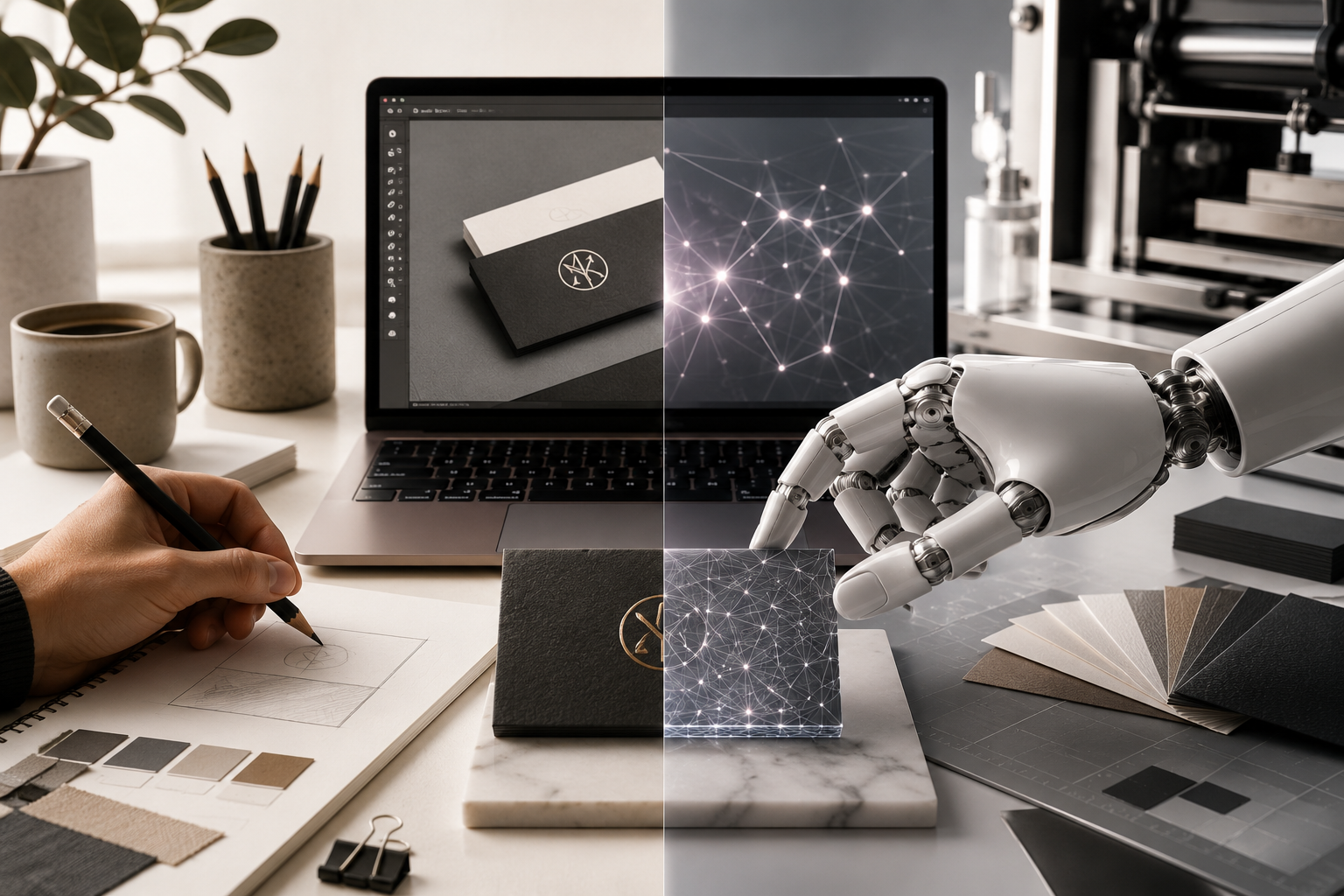
Artificial Intelligence has transformed the world of graphic design in a remarkably short time. Today, there are tools capable of generating illustrations, logos, visual compositions, and even complete brand identity concepts in a matter of seconds. For many businesses, especially those seeking speed and lower costs, an inevitable question arises: can AI completely replace a professional designer?
The answer is more complex than it may seem. While AI can accelerate creative processes and serve as an excellent support tool, the reality of professional printing requires technical knowledge, experience, and human judgment that automated platforms still cannot consistently replicate. This is especially evident in corporate stationery projects, premium business cards, and printed materials where every detail influences brand perception. Numerous printing industry experts agree that AI is useful for generating ideas and concepts, but the files it produces often require manual adjustments to meet professional printing standards.
If you are looking to create printed materials that truly reflect the quality of your company, from corporate stationery to business cards in NYC, Japan Printing can help you transform any concept into a flawless final product. Request a quote today and discover the difference a specialized design and printing team can make.
AI Creates Attractive Images, But Not Always Print-Ready Files
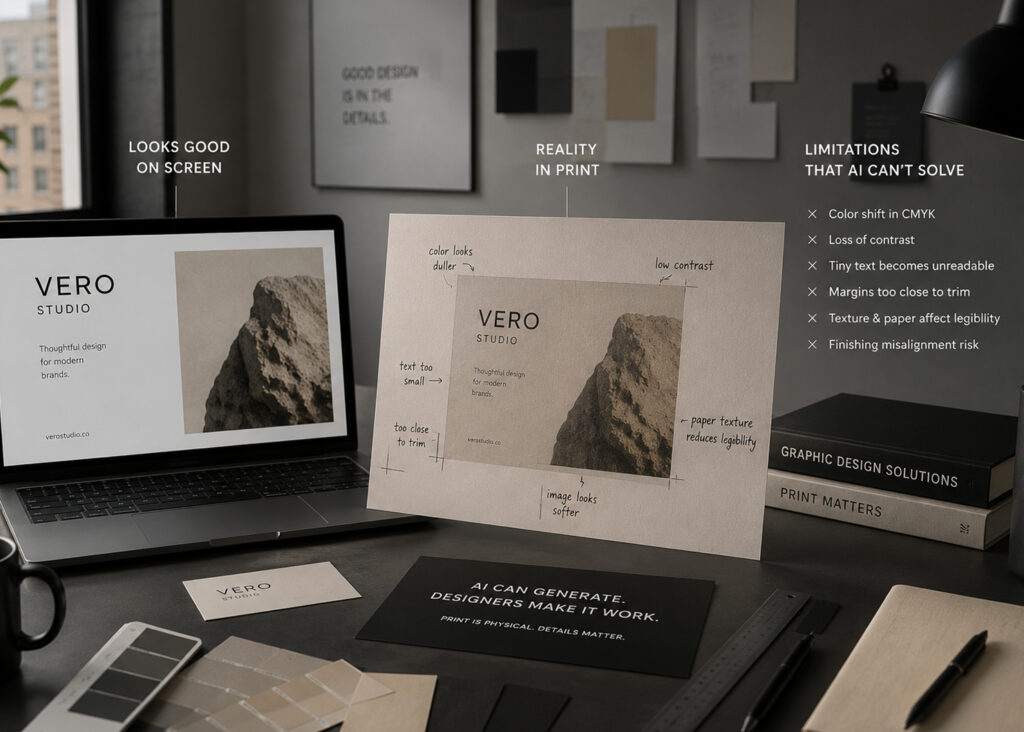
One of the biggest misconceptions about AI is assuming that a visually appealing image is automatically ready for professional printing. In reality, there is a significant difference between an image designed to look good on a screen and a file prepared for production.
AI tools typically generate content optimized for digital media, while commercial printing requires far more rigorous technical specifications. Some of the most common issues include:
- Insufficient resolution for high-quality printing.
- Missing bleed areas.
- Lack of crop marks.
- Incorrect dimensions for specific physical formats.
- Important elements positioned too close to the edges.
- Exporting files in formats that are unsuitable for professional production.
In the case of business cards, these errors can result in cropped text, inconsistent margins, or reduced visual quality. Furthermore, many AI systems generate rasterized images that are difficult to edit later and limit the flexibility required to adapt designs to different printed formats.
For this reason, even when a client uses AI to develop an initial concept, professional design teams often rebuild or correct a substantial portion of the file before sending it to production. This frequently occurs in NYC business card services, where quality standards are particularly high and precision is essential for conveying a professional image.
Color Management Still Requires Human Supervision
One of the most critical aspects of professional printing is color management. What looks spectacular on a screen can appear completely different once printed.
AI platforms primarily work within RGB color spaces designed for digital devices. Printing companies, however, use CMYK systems or specialty inks to reproduce colors on paper. The conversion between these systems can cause significant changes in the final result.
Common examples include:
- Deep blues that lose vibrancy when printed.
- Neon greens that cannot be accurately reproduced with conventional inks.
- Gradients that display unexpected variations.
- Corporate colors that no longer match brand guidelines.
- Blacks that lose depth depending on the configuration used.
For premium brands, these details are essential. A company investing in luxury business cards NYC expects printed colors to match its visual identity precisely.
Print-focused designers perform manual adjustments, color proofs, and technical verifications before approving a project. This level of control remains difficult to automate because every paper stock, finishing option, and printing method can affect the final appearance. Even with the latest advancements in AI, human supervision remains essential to ensure color consistency and accuracy.ant trends for the coming years due to their combination of sustainability, performance, and visual appeal.
Strategic Design and Brand Identity Cannot Be Fully Automated
AI can generate hundreds of visual concepts within minutes, but it does not truly understand a company’s business objectives or the emotions a brand aims to communicate.
When a business invests in premium printed materials, the goal is not simply to obtain an attractive design. The objective is to communicate values, positioning, and differentiation from competitors.
A professional designer contributes elements that go far beyond aesthetics:
- Understanding the target audience.
- Developing effective visual hierarchies.
- Maintaining consistency across corporate materials.
- Adapting designs to multiple formats.
- Interpreting marketing objectives.
- Building a long-term, cohesive visual identity.
AI tools generate results based on patterns learned from vast amounts of data, but they lack business context, cultural sensitivity, and strategic judgment. As a result, they often produce generic concepts that may look appealing on their own but do not necessarily strengthen a brand’s identity.
This becomes particularly important in luxury business cards NYC projects, where every choice of typography, finish, texture, and composition directly influences the perception of exclusivity and professionalism.
Printed Production Requires Technical Expertise That AI Has Yet to Master
Professional printing involves far more than visual design. There is an entire prepress process dedicated to ensuring that the final product prints correctly.
Before a business card reaches a professional printing press, multiple technical aspects are typically reviewed:
- Proper bleed setup.
- Adequate image resolution.
- Font compatibility.
- Color conversion.
- PDF preparation for printing.
- Vector element verification.
- Validation of specialty finishes.
- Safe cutting area checks.
Many industry professionals point out that the most common issues found in AI-generated files are directly related to these technical requirements. Designs may appear flawless on a screen but reveal significant problems during physical production.
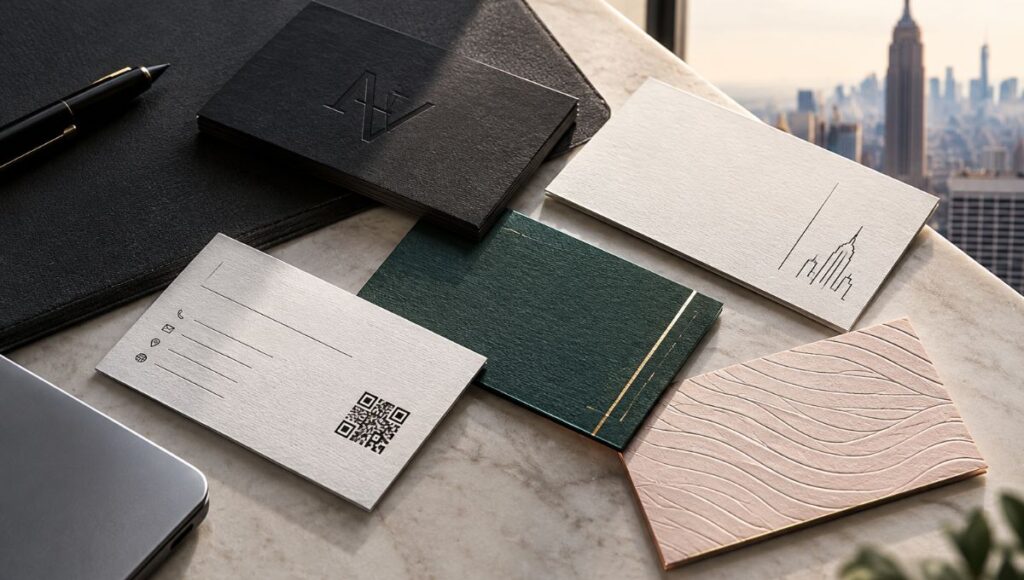
Within specialized NYC business card services, these controls are essential because clients often request premium finishes such as metallic stamping, embossing, letterpress, foil, or specialty papers. Proper preparation of these files requires hands-on experience and production-specific expertise that still relies heavily on human professionals.ods work together seamlessly to achieve the desired outcome.
Conclusion
Artificial Intelligence has proven to be an extraordinary tool for accelerating creative processes, generating initial concepts, and helping designers work more efficiently. However, when it comes to professional printing—especially high-quality products such as corporate business cards and premium printed materials—human involvement remains indispensable.
Limitations related to resolution, color management, file preparation, brand consistency, and quality control make AI far more effective as a complement than as a replacement for professional designers. Technology can generate ideas quickly, but transforming those ideas into flawless printed products still requires experience, judgment, and technical expertise.
If your company wants to stand out with premium printed materials, from corporate stationery to business cards in NYC, Japan Printing combines the advantages of modern technology with the expertise of professional designers and printing specialists. Contact us today for a quote and discover why so many businesses trust us to create luxury business cards NYC and comprehensive NYC business card services that meet truly professional standards.