Business Cards 11.17.26
Corporate Printing for Multi-Location Companies: How to Keep Every Office On-Brand

Daniel Cantor
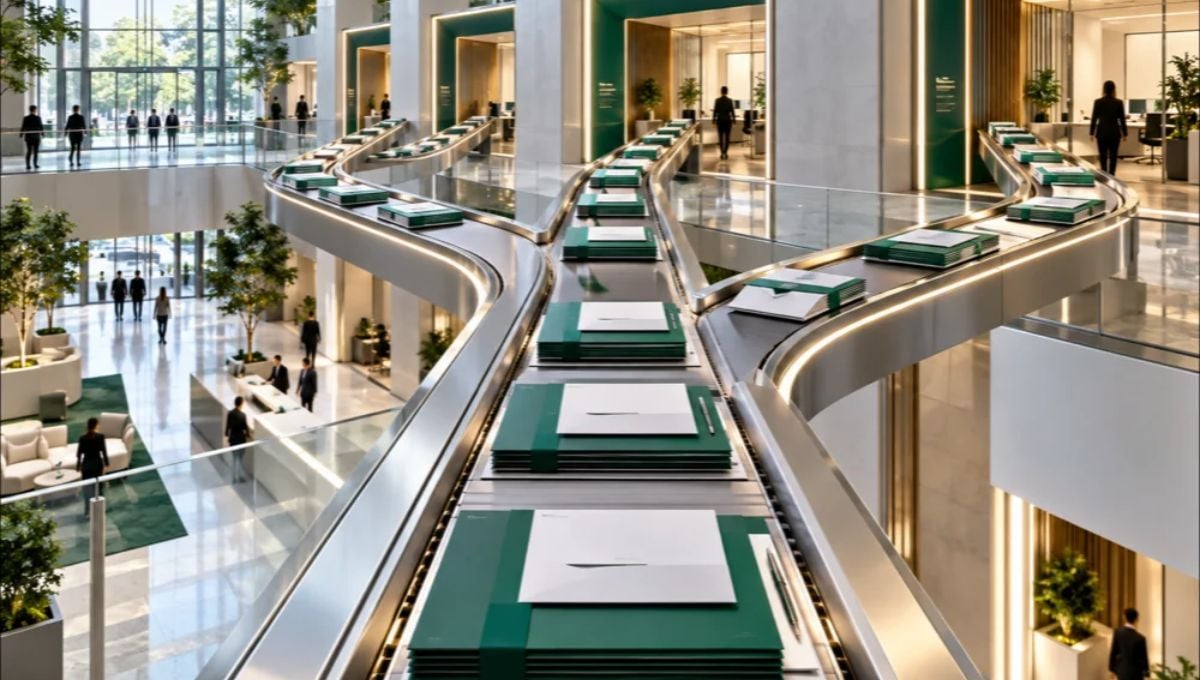
As businesses expand into multiple cities, states, or countries, maintaining a consistent corporate identity becomes increasingly challenging. Every office represents the same organization, but differences in printed materials, business cards, stationery, and marketing collateral can gradually create an inconsistent brand experience. A logo printed in a slightly different color, an outdated business card design, or stationery that uses different typography may seem like minor issues individually, but together they can weaken the visual connection between locations.
Corporate printing plays an important role in keeping a company’s identity recognizable wherever it operates. By establishing clear design standards, centralizing approved artwork, and working with reliable printing partners, businesses can ensure that every office communicates the same level of professionalism. Whether your company operates two offices or dozens, Japan Printing can help bring your corporate identity together through professionally designed and printed business cards and stationery. Contact Japan Printing today to request a quote for your next business card design and printing project.
Establish Corporate Brand Guidelines for Every Location
The foundation of consistent corporate printing is a comprehensive set of brand guidelines. These guidelines establish how a company’s visual identity should appear across all communications, including printed materials produced by individual offices. Without a shared reference, employees and local marketing teams may unintentionally introduce variations when creating or ordering business cards, letterheads, envelopes, presentation folders, and other stationery.
A corporate brand guide should provide specific instructions rather than relying on general descriptions such as “use the company colors” or “keep the logo consistent.” It should identify the exact visual elements and production requirements that every location must follow.
Important elements to standardize include:
- Logo usage: Provide approved logo files, variations, minimum sizes, spacing requirements, and guidelines for placement on different printed materials.
- Corporate colors: Specify official color values and the appropriate color references for print and digital applications.
- Typography: Establish approved typefaces, font weights, sizes, and hierarchy for headings, names, contact information, and supporting text.
- Layout standards: Define margins, alignment, spacing, and other recurring design elements used across stationery.
- Paper and finishing: Document preferred paper stocks, thicknesses, coatings, and finishing options for recurring printed products.
- Contact information: Establish consistent formatting for employee names, job titles, phone numbers, email addresses, and company websites.
It is equally important to provide examples of approved materials. For instance, a company can include reference designs for employee business cards, corporate letterheads, and envelopes so that every location understands what the finished products should look like.
These standards should also distinguish between elements that cannot change and information that can be customized. A branch should be able to include its local address and telephone number without independently modifying the company’s logo, typography, or overall layout.
For organizations operating across several markets, these guidelines become a practical reference for employees, designers, and printing providers. They reduce uncertainty during production and make it easier to reproduce the same corporate identity across different locations.
Centralize Business Card and Stationery Design Templates
One of the most effective ways to prevent inconsistent corporate printing is to centralize the design of frequently used materials. When every office creates its own business cards or stationery from scratch, differences in layout, typography, logo placement, and proportions can quickly emerge.
Instead, companies should develop a collection of approved templates that can accommodate different employees, departments, and office locations without changing the underlying visual identity.
Business cards are particularly important because they are frequently exchanged during meetings, networking events, conferences, and client interactions. A company with multiple locations should ensure that an employee in New York receives a business card that follows the same design standards as an employee working in another state.
A centralized template system can include:
- Employee business cards: A standardized layout with editable fields for names, job titles, phone numbers, email addresses, and office locations.
- Corporate letterheads: Consistent header and footer designs for official correspondence across all branches.
- Business envelopes: Matching logo placement, typography, and company information.
- Presentation folders: Standardized designs for proposals, contracts, corporate presentations, and client meetings.
- Company stationery sets: Coordinated combinations of business cards, letterheads, envelopes, and other branded materials.
However, centralization should not mean that every employee must have identical contact information or that every location must display the same address. The objective is to maintain a consistent design while allowing necessary information to change.
For example, an approved business card template might preserve the same logo dimensions, corporate colors, typefaces, and overall composition while allowing each employee’s name, position, and contact details to be personalized.
Companies seeking professional business card design nyc services should also consider how their designs will work across the entire organization, particularly when employees in different locations need to order additional cards over time.
Having a professional printing partner develop and maintain approved artwork makes this process easier. Instead of recreating designs for every new employee or branch, companies can rely on established layouts that preserve their visual identity and simplify repeat orders.
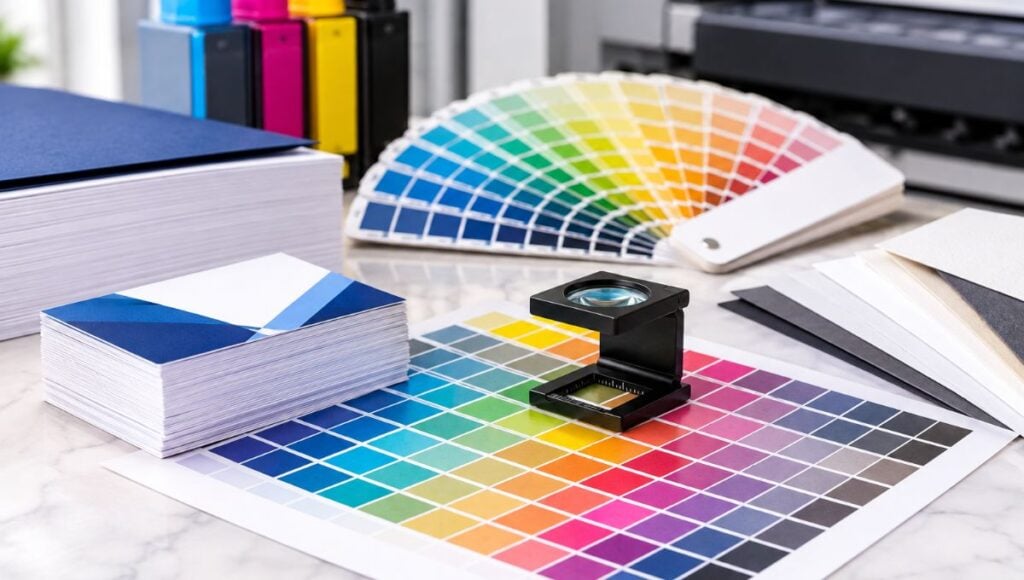
Standardize Printing Specifications, Materials, and Color Reproduction
An approved design does not automatically guarantee consistent printed results. Even when every office uses the same artwork, differences in printing equipment, paper stocks, color settings, and finishing processes can produce noticeably different materials.
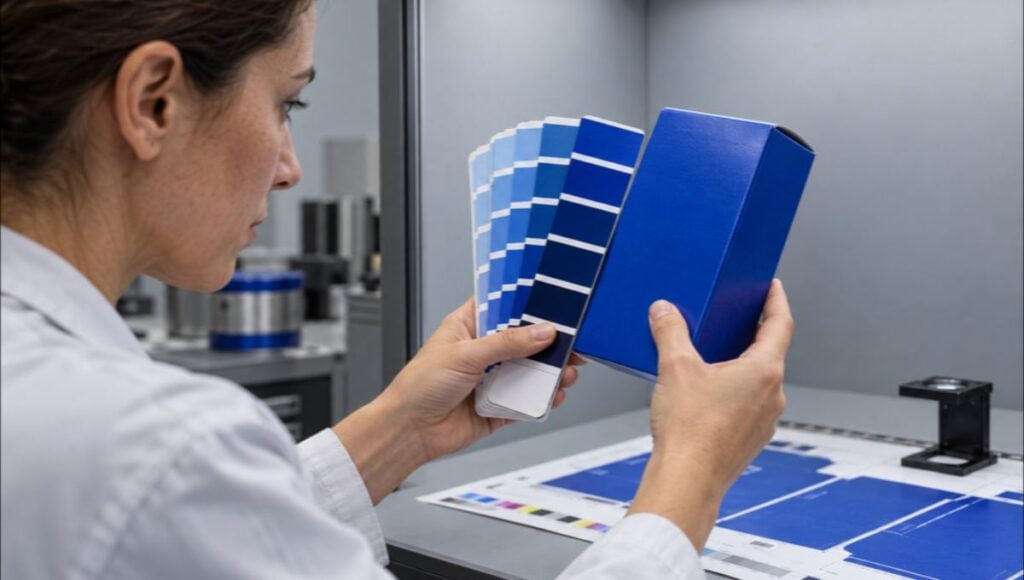
This is especially important for companies whose corporate identity relies on distinctive colors or premium stationery. A business card printed with a different shade of blue or a noticeably different paper finish may not match the materials distributed at another office.
Color management is one of the most important considerations in this process. According to Adobe’s documentation on color management, color profiles help translate colors between different devices and output conditions. This is particularly relevant when artwork is prepared on multiple workstations or sent to different printing devices. Adobe also recommends coordinating color workflows with printing providers to achieve more predictable results.
Companies should therefore establish clear production specifications for their recurring printed materials.
Consider standardizing the following:
- Printing method: Determine which production methods are appropriate for each product and establish consistent requirements for recurring orders.
- Color specifications: Document approved color values and coordinate the appropriate color profiles and printing conditions with the production provider.
- Paper selection: Specify paper type, weight, texture, and finish for business cards, letterheads, and other stationery.
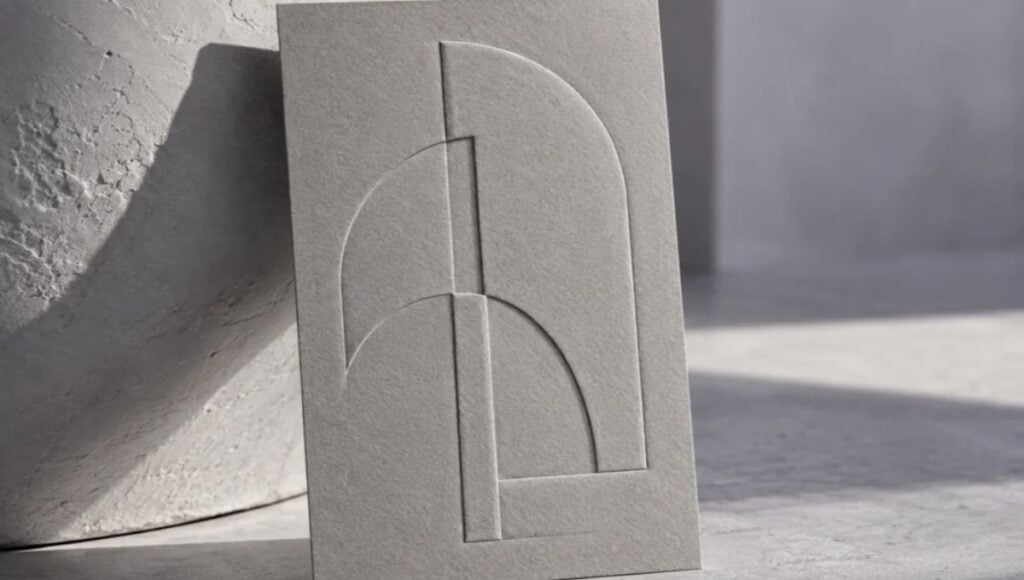
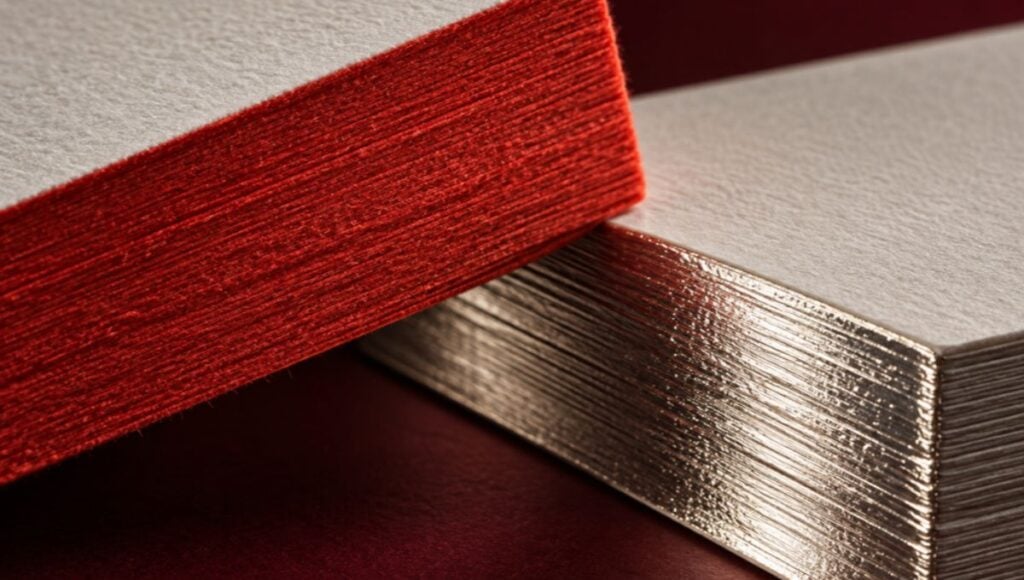
- Finishing techniques: Standardize options such as matte or gloss coatings, foil stamping, embossing, and other special treatments where applicable.
- Finished dimensions: Establish consistent sizes and tolerances for each stationery product.
- Proof approval: Review artwork and, when necessary, physical samples before approving larger production runs.
Paper selection deserves particular attention. For example, an uncoated business card and a coated business card can reproduce the same printed colors differently because the paper surfaces absorb and reflect ink differently. The choice of stock should therefore be considered part of the overall design and production specification, not simply a purchasing decision.
Industry resources such as PRINTING United Alliance’s GRACoL and other print production specifications provide frameworks that help printing professionals and print buyers communicate production requirements and maintain more consistent output.
For companies ordering materials for several offices, working with a printing partner that understands these specifications can help reduce unwanted variations between orders. Maintaining consistent artwork, materials, and production requirements creates a more reliable foundation for corporate printing.
Build a Centralized Ordering and Quality Control Process
Even the most detailed brand guidelines and carefully designed templates can become ineffective without a reliable ordering and quality control process. Multi-location companies need a system that makes it easy for every office to obtain approved printed materials while preventing outdated artwork, unauthorized modifications, and unnecessary design variations.
A centralized ordering process allows corporate headquarters or a designated marketing department to maintain oversight of printed materials without having to personally manage every individual order.
For example, a company could establish a system in which each office submits its business card requirements using an approved template. The central team verifies the information, while the printing provider handles production according to previously established specifications.
An effective workflow should include several steps:
- Create a centralized asset library. Store approved logos, design templates, print-ready files, and production specifications in an organized location accessible to authorized employees.
- Assign clear responsibilities. Identify who can request new materials, approve design changes, verify employee information, and authorize printing orders.
- Establish a standard ordering procedure. Give every office clear instructions for requesting business cards, stationery, and other corporate materials.
- Verify artwork before production. Check names, job titles, addresses, telephone numbers, and email addresses to prevent avoidable printing errors.
- Maintain production records. Keep track of approved designs, specifications, order quantities, and previous production details to simplify repeat orders.
- Review finished materials. Periodically inspect printed products to identify inconsistencies in colors, paper, finishing, or overall presentation.
Inventory management is another important consideration. Offices should have access to the materials they need without accumulating excessive quantities of outdated business cards or stationery. This becomes particularly relevant when employees change positions, new branches open, or corporate contact information is updated.
Companies should also establish a procedure for implementing brand changes. When a logo, corporate color, or business card layout is updated, the revised artwork should be distributed through the central asset library, and outdated versions should be removed from active use.
A structured approach makes corporate printing more manageable as a company grows. It also helps local teams obtain professional materials without having to make independent design and production decisions that could compromise brand consistency.
Conclusion
Maintaining a consistent corporate identity across multiple locations requires more than distributing the same logo to every office. It involves establishing clear brand guidelines, centralizing stationery and business card templates, standardizing printing specifications, and creating an organized ordering and quality control process. When these elements work together, businesses can ensure that employees in every location represent the same recognizable and professional brand.
At Japan Printing, we understand the importance of professionally designed business cards and coordinated corporate stationery. Whether your organization needs new business card designs, employee card reprints, or a complete stationery project, our team can help you create printed materials that reflect your corporate identity. Contact Japan Printing today to request a quote for your business card design and creation project and keep your brand looking consistent wherever your business operates.