Stationery 07.24.26
How to Choose the Best Printing Company in New York: The Checklist No One Tells You About

Daniel Cantor
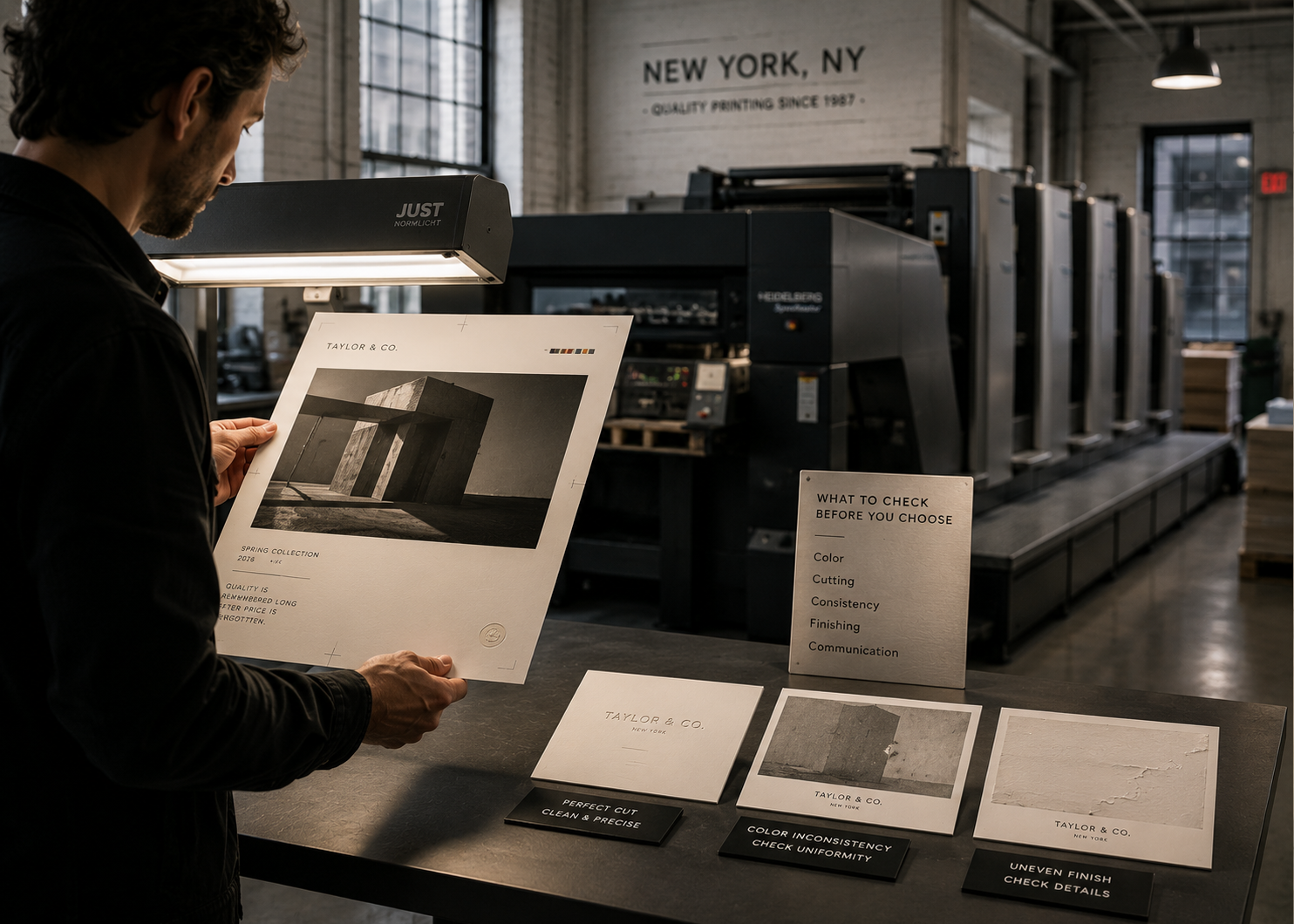
Choosing a printing company in New York may seem simple until it is time to compare quotes, materials, finishes, production times, and quality. A company may offer a very attractive price, but that does not necessarily mean it is the right choice for a corporate identity project, stationery, or professional business cards. When every detail matters, the difference between standard printing and a truly premium result may come down to aspects that do not always appear on a quote: the team’s experience, color management, paper selection, the ability to produce special finishes, and the level of attention provided during the prepress stage.
This is especially important when you are looking to create business cards in NYC that accurately represent your brand’s image. Business cards are a physical touchpoint and, in many cases, are part of the first impression a potential client or business partner receives from a company.
That is why, before choosing between different nyc business card services, it is worth analyzing much more than price. In this guide, you will find a practical checklist to evaluate printing companies, identify potential red flags, and choose a solution that truly fits your needs.
If you are looking for a team that combines design and production to create professional stationery pieces, you can request a quote for your business card design and creation project with Japan Printing and explore the options available for your brand.
Don’t Compare Prices Alone: Compare Exactly What Each Quote Includes
One of the most common mistakes when looking for a printing company in New York is comparing only the final price. The problem is that two quotes with different prices may be offering completely different products. For example, a standard 16 pt card should not be directly compared with a thicker card that includes lamination, foil, letterpress, or a special treatment.
Before making a decision, it is important to request a detailed quote and check exactly what is included. A proper comparison should consider:
Type and thickness of the paper or cardstock.
Total quantity of units.
Single-sided or double-sided printing.
Printing system or method used.
Surface finish.
Die-cutting or special shapes.
Rounded corners.
Foil, embossing, or debossing, when applicable.
File preparation and prepress.
Digital or physical proof.
Estimated production time.
Shipping or local pickup.
Taxes and other additional charges.
The difference between an affordable printing company and a specialized one is not always the machine it uses, but rather the entire process surrounding the printing itself. A provider that reviews files, helps select materials, and clearly communicates technical limitations can significantly reduce the risk of receiving a product that does not meet your expectations.
This is especially relevant for luxury business cards nyc projects, where materials and finishes are an essential part of the visual result. In this segment, a transparent quote should make it clear what you are paying for and what specific characteristics the final product will have.
The most practical recommendation is to request comparable quotes. If each provider quotes a different combination of paper, finish, and quantity, price alone will not allow you to determine which one truly offers the best balance between quality and value.
Research Technical Capabilities: Paper, Color, Proofs, and Finishes Matter More Than You Think
The quality of a printed piece depends on multiple variables, not just the resolution of the original file. The type of paper, the surface of the substrate, color management, and the production method can significantly affect the final result.
For this reason, one of the most important questions you should ask any printing provider is what technical options they can offer for your project. A good provider should be able to explain the differences between various papers and recommend an option based on the design, intended use, and brand image you are looking to achieve.
Color management also deserves special attention. Color reproduction can vary depending on the printing process and the substrate being used. For this reason, visual identity projects should be managed using a consistent color workflow and realistic expectations regarding physical color reproduction.
Before approving an order, ask:
Can I request a proof before full production?
How are files reviewed before printing?
Which color profiles does the provider recommend?
What happens if the file has technical issues?
What paper options are available?
Which finishes can be produced in-house?
Which processes are outsourced?
Is a physical sample of the materials available?
Paper selection can also have a sustainability dimension. If you want to use FSC-certified paper, it is worth verifying that both the provider and the product meet the applicable requirements. FSC explains that chain-of-custody certification allows forest-based products to be tracked throughout the supply chain and that the use of an FSC label on printed materials requires compliance with specific certification conditions.
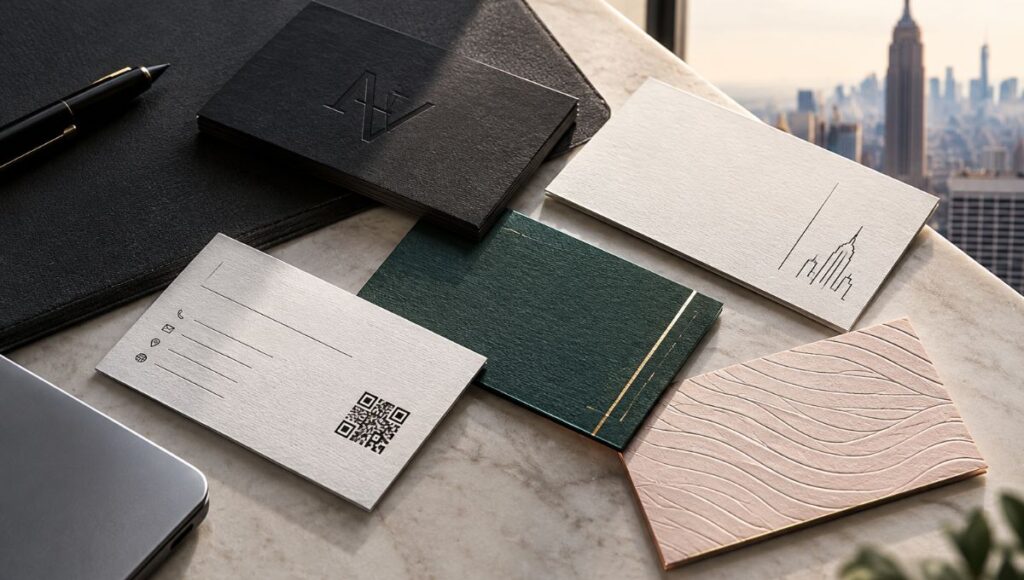
For luxury business cards nyc projects, these questions become even more important. A premium business card is not defined simply by having thick paper: the combination of design, material, color, printing, and finishing should work together as one cohesive system.
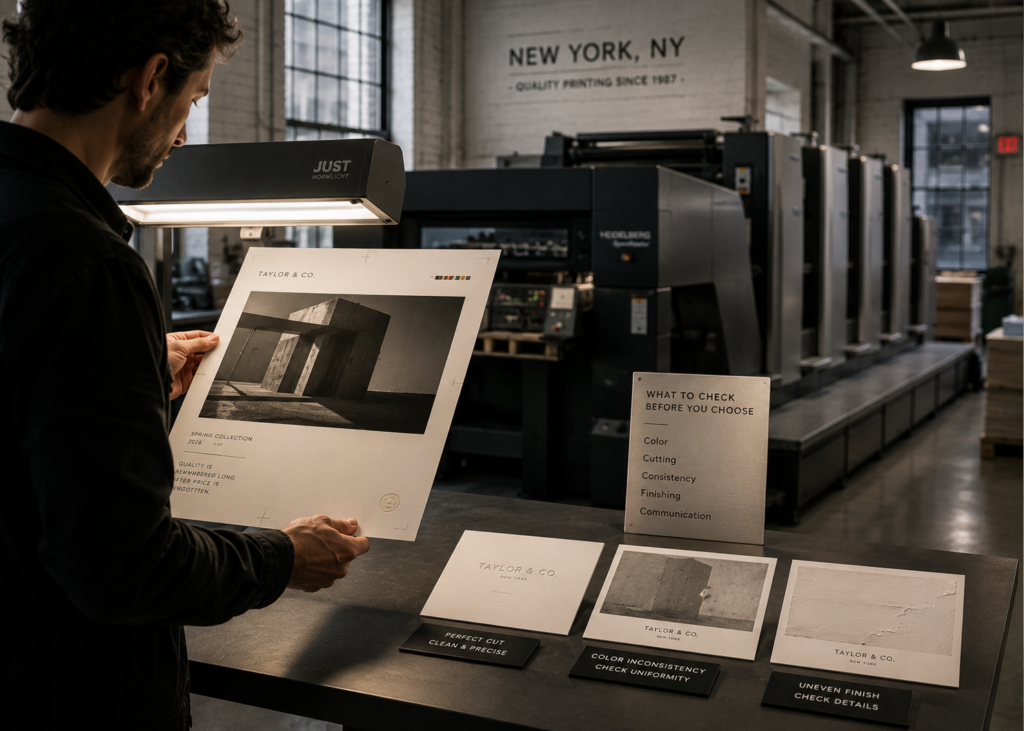
Evaluate Service and Communication: A Good Printing Company Should Also Know How to Manage Projects
One aspect that many people discover too late is that the experience of working with a printing company can be just as important as the quality of the printing itself. When a project involves launch dates, meetings, events, or corporate requirements, poor communication can create problems even when the final product is technically well produced.
That is why, before placing an important order, pay attention to how the provider responds from the very first interaction. Do they answer questions clearly? Do they explain limitations? Do they provide detailed quotes? Do they communicate realistic timelines? Do they suggest alternatives when a particular finish is not feasible?
A professional provider should help you understand the process, especially if you do not have technical experience in graphic production.
It is also worth asking:
Who will be your point of contact throughout the project?
How are final files approved?
What happens if there is an error in the file?
What is the actual production timeline?
How much extra time do they recommend for urgent projects?
How are reprints handled?
What happens if the final result has a production defect?
Can they coordinate multiple stationery pieces to maintain consistency?
The last point is especially important for companies that need more than business cards. A printed identity system may include business cards, letterheads, envelopes, folders, notecards, and other elements. Working with a provider that understands the relationship between all these pieces can make it easier to maintain visual consistency across the brand.
When comparing nyc business card services, do not evaluate only who promises to print the fastest. Also consider who can support you from design preparation through final production.
Speed is useful, but predictability is often even more valuable. A provider that communicates timelines accurately and maintains an organized process can help you avoid last-minute surprises.
Complete the Final Checklist Before Paying: Questions That Can Help You Avoid a Bad Experience
Before confirming your order, perform one final review. This step may seem unnecessary when you are in a hurry, but it is precisely where you can identify important differences between providers.
First, verify that the quote corresponds exactly to the product you want to receive. Confirm quantities, dimensions, paper, printing, finishes, and deadlines. If you are comparing different business cards in NYC, make sure that all proposals are based on equivalent specifications.
Next, review the approval process. It is important to know whether the provider begins production immediately after receiving the file or whether there is a formal approval stage. If the project is particularly important, ask whether you can review a proof before authorizing full production.
You should also check the provider’s experience with similar projects. A portfolio can give you useful information about the visual quality of their work, although it is always recommended to ask for physical samples when materials and finishes are essential elements of the project.
Your final checklist may include:
The quote describes exactly the product requested.
The paper and thickness are clearly specified.
The finishes are included and described.
The production timeline is confirmed.
Additional costs have been identified.
The final file has been reviewed.
The approval process is clear.
The procedures for production errors are known.
The provider has shown relevant work or samples.
Communication throughout the project has been satisfactory.
The provider can produce other required pieces to maintain brand consistency.
It is also worth considering the provider’s business legitimacy. Companies conducting certain types of commercial activities in New York may be subject to tax and registration requirements. NYC Business, for example, indicates that certain businesses selling tangible goods or taxable services in New York need a Certificate of Authority to collect sales tax. This does not replace a quality assessment, but it can be part of a general review of the company you are planning to work with.
Finally, remember that the “best” provider is not necessarily the cheapest, the fastest, or the one with the most options. It is the one that can consistently meet the specific needs of your project, from design and file preparation through production and delivery.
Conclusion
Choosing a printing provider in New York requires looking beyond the advertised price. The real difference is often found in the details: the quality and variety of materials, color management, technical expertise, quote transparency, finishing capabilities, communication, and consistency throughout the production process.
If you are looking for nyc business card services, use this checklist before making a decision and compare providers based on equivalent specifications. For luxury business cards nyc projects, pay special attention to paper selection, finishes, and the possibility of reviewing samples before producing large quantities.
Also, think of the project as a complete system. Your business cards should visually integrate with the rest of your stationery and reinforce your brand identity at every touchpoint. Proper planning can help you achieve a more consistent result and avoid costs associated with mistakes or reprints.
At Japan Printing, we understand that every printing project begins long before a machine starts running. If you need to develop a new printed identity or produce professional business cards in NYC, we invite you to request a quote for your business card design and creation project with Japan Printing. Our goal is to help you turn your ideas and brand requirements into printed pieces that represent your business with precision and quality.