Stationery 09.14.26
What Is Variable Data Printing? How Brands Personalize Print at Scale

Daniel Cantor
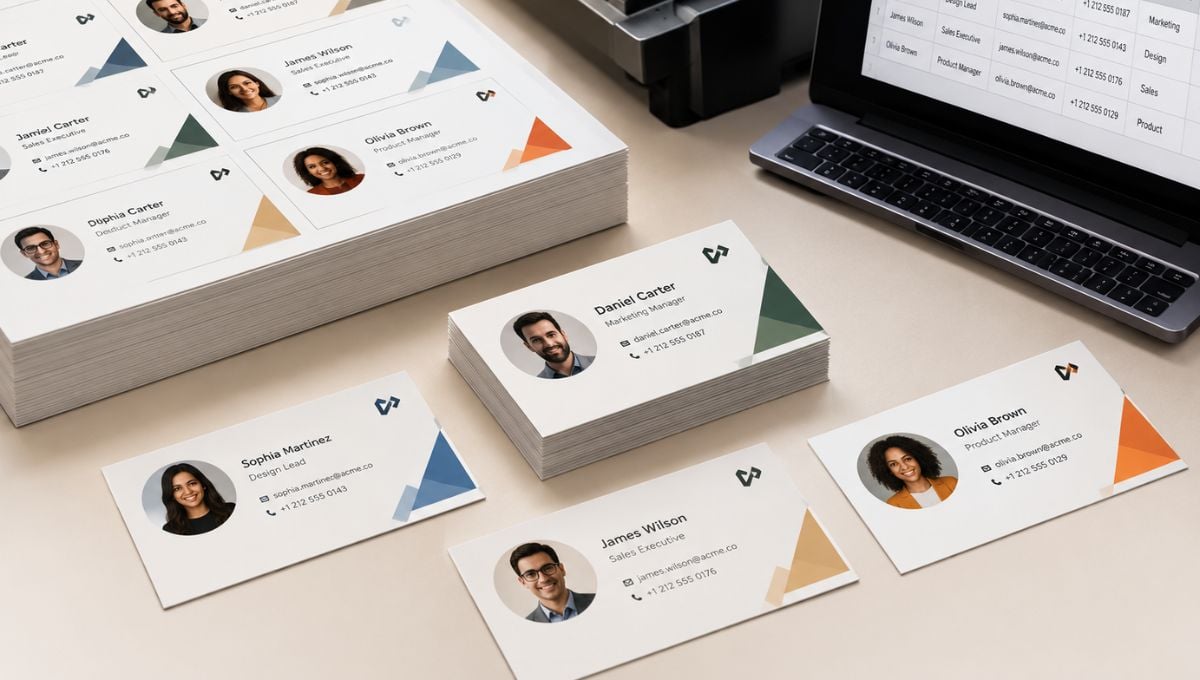
Print is often associated with consistency: one design, one message, and hundreds or thousands of identical pieces. Variable Data Printing (VDP) changes that model by allowing specific elements of a printed piece—such as names, images, offers, addresses, QR codes, or other information—to change from one copy to the next while the overall design remains consistent. In other words, a brand can create a single print campaign in which every individual piece is potentially different. Modern VDP workflows use digital printing technology and data-driven templates to merge customer information with a predefined design, making personalized print practical at much larger scales.
For brands that care about professional presentation, this technology creates opportunities far beyond direct mail. Personalized stationery, employee materials, event collateral, promotional cards, and even selected business-card applications can incorporate variable information while maintaining a cohesive visual identity. If you’re looking for professionally designed and produced business cards in NYC, Japan Printing can help you develop a print project around your brand, whether you need a traditional business card order or a more customized print solution. Contact Japan Printing to quote your business card design and creation project and explore options that fit your brand, quantity, and timeline.
What Is Variable Data Printing and How Does It Work?
Variable Data Printing, commonly called VDP, is a digital printing process that allows individual pieces within the same print run to contain different information. Traditional printing generally produces the same artwork repeatedly. With VDP, the underlying design can remain constant while selected elements are populated from a data source. Those elements can include text, images, graphics, offers, geographic information, QR codes, or other approved variable content.
The concept is easier to understand through a simple example. Imagine a company wants to send 5,000 promotional postcards. Instead of printing the same postcard 5,000 times, the company could create a template containing fixed brand elements and variable areas. The recipient’s name, local offer, sales representative, image, or QR code could then change from one postcard to another.
A typical VDP workflow includes several components:
A fixed design: The brand’s colors, typography, logo, layout, and other permanent elements.
Variable fields: Areas designated to change between printed pieces.
A structured data source: Information such as names, addresses, customer segments, product information, or campaign codes.
Variable-content software: A workflow that connects the data to the appropriate fields in the design.
A digital press: The equipment that produces the individualized pages or pieces without requiring a separate physical plate for every version.
Quality control: Verification that the correct information is matched to the correct printed piece.
The technical standards behind these workflows are also well established. ISO 16613-1:2017, for example, defines PDF-based variable content replacement using templates and substitution data. The standard describes a workflow in which a PDF template contains placeholders and variable content is supplied separately before being merged into the final output.
Another important technology is PDF/VT, an ISO standard specifically designed for variable and transactional printing. PDF/VT builds on the PDF imaging model and is designed to support personalized print while maintaining device-neutral, production-ready workflows.
The important takeaway is that VDP is not simply “printing different names.” It is a structured production system that connects design + data + digital printing. When those three components are managed correctly, a brand can produce thousands of individually relevant pieces while maintaining a unified visual identity.
How Brands Use Personalization to Make Print More Relevant
The biggest advantage of VDP is the ability to make printed communication more relevant to the person receiving it. A generic piece of marketing material speaks to an audience. A personalized piece can speak to an individual, customer segment, location, or specific business relationship.
For example, a retailer could use purchase history to determine which products or offers appear on a customer’s postcard. A real estate company could create mailers featuring neighborhood-specific information. A professional services company could send different versions of a campaign depending on whether the recipient is an existing client, a prospect, or a former customer. VDP can also support geographic personalization by changing messaging, imagery, contact information, or offers based on location.
This makes VDP particularly useful for campaigns where relevance matters more than simply producing a large quantity of identical material.
Common personalization possibilities include:
Names and greetings: Addressing recipients individually.
Localized messaging: Changing content according to city, neighborhood, region, or market.
Personalized offers: Presenting different promotions to different customer segments.
Variable photography: Showing different images based on customer interests or demographics.
Individual QR codes: Connecting printed pieces to specific digital destinations or campaign tracking systems.
Sales representative information: Displaying the appropriate representative’s name, photograph, phone number, or email.
Customer-specific information: Including relevant account, product, or service information where appropriate.
Event information: Creating tickets, invitations, badges, or materials with unique attendee information.
USPS has also recognized personalization as a way to make direct mail more relevant and connect physical mail with digital experiences. Its personalization promotion materials specifically describe VDP and related technologies as tools for creating varying levels of mailpiece personalization and connecting physical pieces with personalized URLs, web experiences, and mobile interactions.
Importantly, personalization does not have to mean making every piece dramatically different. A sophisticated campaign might change only one or two elements while keeping 90% of the artwork identical. That can be enough to make a piece feel more intentional without sacrificing brand consistency.
This principle can also be useful for stationery and business materials. A company with multiple executives, offices, departments, or sales representatives may need printed materials that share the same visual system but contain different names, titles, contact details, or locations. Instead of treating every version as an entirely separate design project, variable workflows can help organize those differences within a controlled production system.
For companies searching for affordable business cards NYC, personalization can be approached strategically rather than extravagantly. Not every business card needs complex variable printing. But when a company has multiple employees or locations, controlled variation can become useful. Similarly, brands that need fast business cards NYC services may benefit from clearly structured templates and repeatable production specifications that make future versions easier to manage.
The goal is not personalization for its own sake. The goal is to make printed communication more useful, relevant, and connected to the recipient while preserving the brand’s overall identity.
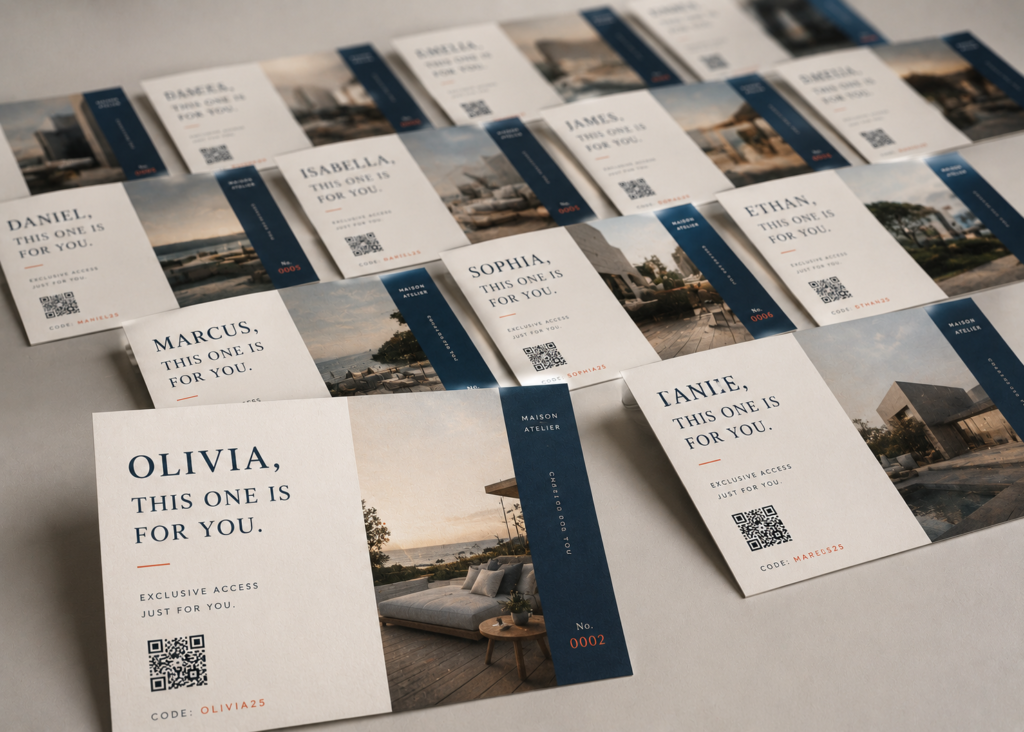
Variable Data Printing for Business Cards, Stationery, and Brand Materials
VDP is commonly associated with direct mail, but the same underlying concept can be valuable for professional stationery and branded materials. Business cards are a particularly interesting example because the basic design often needs to remain consistent while certain information changes for every individual.
Consider a company with 100 employees. The company may want every employee’s business card to use the same:
Logo
Typography
Brand colors
Paper stock
Dimensions
Finishing
Layout
At the same time, each employee may require a different:
Name
Job title
Phone number
Email address
Department
Office location
QR code
Language version
Instead of treating those cards as 100 unrelated designs, a structured variable-data workflow can maintain the common design while substituting approved employee information.
The same principle can apply to other stationery and corporate materials. Japan Printing, for example, provides business cards, stationery, design preparation, and related print services, while its current product information also notes that variable sets can be produced for different team members, executives, or departments for products such as custom notecards.
Potential applications include:
Employee business cards
Executive stationery
Personalized notecards
Corporate correspondence
Event invitations
Name badges
Appointment cards
Promotional postcards
Direct-mail campaigns
Location-specific marketing pieces
Sales materials with representative information
Membership or loyalty communications
There is an important distinction, however: VDP does not automatically make every print project cheaper or faster. The economics depend on the quantity, equipment, data preparation, design complexity, finishing requirements, and production workflow. Digital printing is often particularly useful for short runs and variable jobs because it avoids the need to create a separate traditional printing setup for every version.
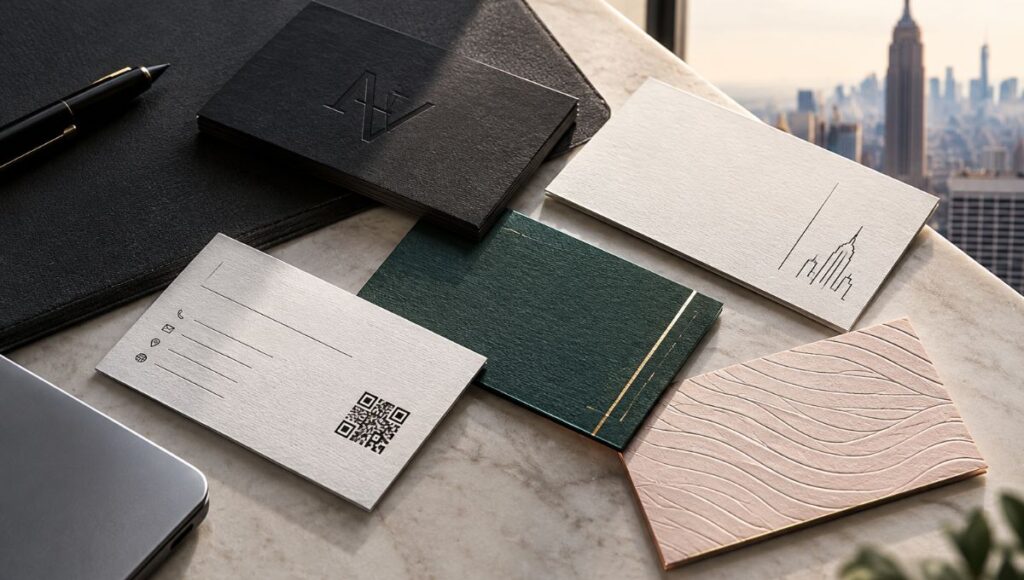
For business cards specifically, personalization should be balanced against the purpose of the card. A simple employee card with changing contact information may be an excellent candidate for a controlled variable-data workflow. A luxury card built around specialized letterpress, foil, embossing, or other processes may require a different production approach. Japan Printing offers a broad range of business-card formats and finishes, including raised ink, painted edges, foil, embossing, letterpress, spot gloss, and standard cards, so the appropriate production method depends on the desired result.
This is also where professional design and production experience become important. A variable-data project should not simply be handed from a spreadsheet to a press. The template needs to account for text lengths, image dimensions, typography, alignment, color, margins, and other production variables. Data must also be checked carefully before printing.
For organizations comparing affordable business cards NYC options, the best approach is therefore to consider the complete workflow rather than just the price per card. And when the priority is fast business cards NYC, a well-organized repeatable template can help simplify future orders while keeping the brand consistent.
What Brands Should Consider Before Starting a VDP Project
Successful variable data printing begins long before the digital press starts producing sheets. The quality of the final printed pieces depends on both the creative template and the data feeding it. A beautiful design cannot compensate for incorrect customer information, inconsistent formatting, missing fields, or poorly structured source data.
The first step is defining exactly what should remain fixed and what should change. For example, a business card template might keep the logo, typography, paper, colors, and layout fixed while allowing the employee’s name, title, email, telephone number, and QR code to vary.
Brands should consider several areas before production:
Data quality
The information supplied to the printer needs to be accurate and consistently formatted. Names, addresses, telephone numbers, URLs, and other fields should be reviewed before production. A VDP system can automate the placement of information, but it cannot magically determine whether the underlying information is correct.
Design flexibility
Variable content can have unpredictable lengths. One person’s name may be short while another’s is significantly longer. A job title may require one line for one employee and two lines for another. The design should therefore accommodate reasonable variations without creating awkward typography or layout problems.
Image management
If photographs or other graphics are variable, the files should meet the appropriate production specifications. Different images may also have different aspect ratios, resolutions, or color characteristics, which can create problems if they are not standardized.
Data security
Personalized printing frequently involves customer or employee information. Brands should determine what data is necessary for the campaign, who has access to it, how it is transferred, and how unnecessary information is handled.
Proofing and quality control
Variable projects require more than approving one static proof. A production workflow should test different records and verify that variable fields appear correctly. It is especially important to check edge cases, such as unusually long names, missing information, special characters, or alternative language versions.
Production requirements
The chosen print process, paper, finishing, quantity, and turnaround can all influence the best workflow. VDP is fundamentally associated with digital production, but the finished piece can still involve sophisticated materials and finishing decisions depending on the project.
Technical standards such as PDF/VCR and PDF/VT demonstrate why structured variable-data workflows matter. They provide standardized approaches for combining templates and variable content rather than relying on ad hoc manual file creation.
For a print company, the objective is ultimately to make personalization repeatable. If a business has 20 employees today and 50 next year, the system should ideally be capable of accommodating that growth without requiring the creative team to manually rebuild every card from scratch.
That same philosophy applies to larger corporate print programs. Japan Printing describes its partnership services as supporting centralized print workflows, consistent branding, reorders, and growing organizations with ongoing print requirements.
For businesses looking for fast business cards NYC, repeatability can be particularly valuable. A standardized template and organized production data can make reorders and employee updates easier to manage. At the same time, companies looking for affordable business cards NYC should consider whether personalization genuinely adds value to their project before investing in a more complex workflow.
The best VDP campaigns are therefore not simply technologically impressive. They are carefully planned, data-accurate, brand-consistent, and designed around a clear business purpose.
Conclusion
Variable Data Printing brings something traditionally associated with digital marketing—individual relevance—into the physical world. By combining structured customer or employee data with reusable design templates and digital printing technology, brands can create print pieces that vary from one recipient to another without abandoning consistency. From direct mail and promotional campaigns to employee stationery, notecards, and business cards, VDP gives organizations a practical way to scale personalization. Industry standards such as PDF/VCR and PDF/VT further demonstrate that variable-content printing is supported by established technical workflows rather than being a purely experimental concept.
The key is choosing the right level of personalization for the project. Whether you need affordable business cards NYC, fast business cards NYC, personalized stationery, or a more complex data-driven print campaign, the design and production process should support your brand rather than complicate it. If you’re ready to create a professional print project, contact Japan Printing to get a quote for your business card design and creation project. Our team can help you explore the right combination of design, paper, printing, finishing, and production for your needs. Get a Quote from Japan Printing